








Ask for a side light for your bike and you will be handed two completely different parts, and neither does the job the name suggests. That confusion is not your fault. Google cannot resolve the phrase either. Its own summary for the term splits the answer between motorcycle side indicators and bicycle side strips, then stops and asks the searcher which of the two they meant. When the search engine has to ask, nobody on that page has explained the part.
So here is the explanation, and then the better question underneath it: what really happens to your bike when a driver looks at you from the side.
Two parts, one name
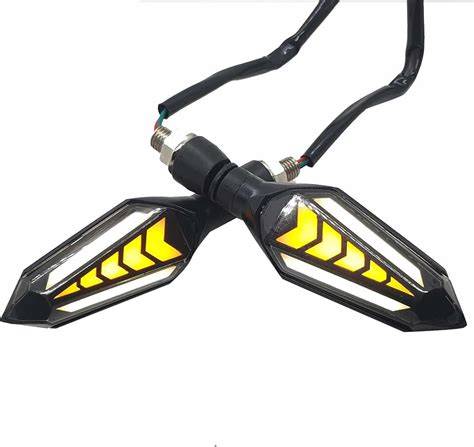
The first is a side indicator, sold also as a side blinker or a handlebar turn signal. Amber, mounted near the fork or on the bar end, wired into the indicator circuit. Nearly every popular listing under this search term on Indian marketplaces is one of these.
The second is a side visibility strip: a thin light running along a frame or a wheel, usually rechargeable, meant to be noticed by a car crossing your path. That is a bicycle part. It is built for bicycle speeds and a machine with no electrical system to tap into.
They are not substitutes for one another. One announces a turn. The other marks a presence. Buy the first hoping for the second and you have bought a blinker.
An indicator makes a promise, not a presence
An indicator is the only lamp on your bike that commits you to something, which is exactly why it is the wrong tool here. It is dark until you reach for it, it means “I am about to turn”, and a driver who sees amber reads intention, not position. Leave it blinking by mistake on a straight road and you have told every car around you something untrue about where you are going. We went through that trade in full in our guide to the indicator light on a bike.
A second pair of blinkers further forward widens the angle from which your turn can be read. Useful. It does nothing for the moment before you turn, which is the moment that hurts you.
Side on, your bike goes dark
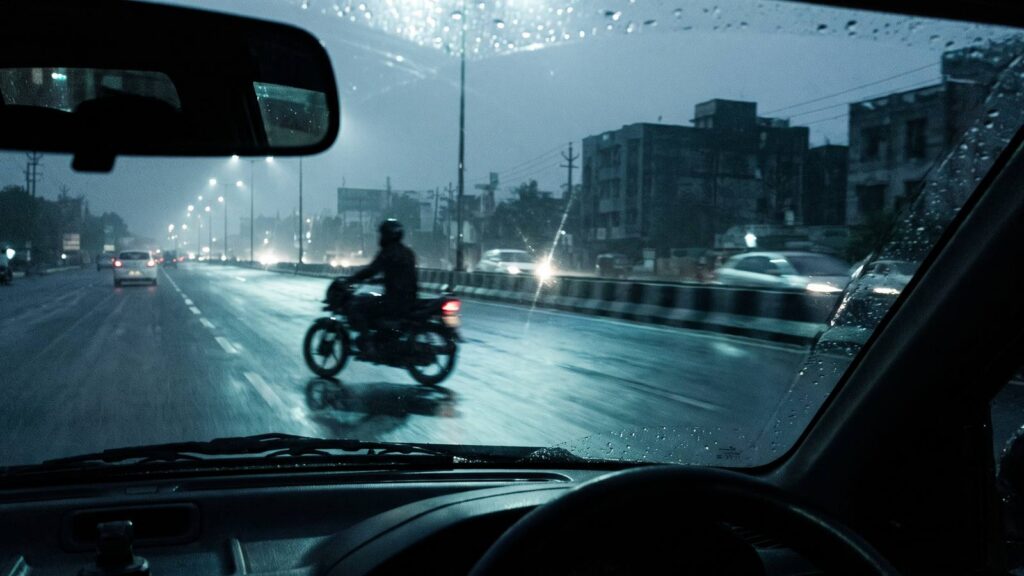
Count the lamps aimed at someone standing at right angles to your motorcycle at night. Your headlight throws forward. Your tail lamp throws back. From the flank, nothing is pointed at the observer. All he gets is your outline against whatever happens to be behind you, which at night is usually black tarmac, and a faint spill of your headlight on the road ahead.
That is the geometry behind the crash riders fear most: a car edges out of a side road or turns across your line, and the driver says afterwards that he looked and never saw a bike. Often he did look. He looked at a narrow dark shape with no light facing him against a dark background, and his eye found nothing to catch on.
The junction is an oblique angle, not a right angle
Here is the part that changes what you should actually buy. A true side-on view is rare. You are both moving toward the same junction, so the real angle between his eye and your machine is somewhere in between: he is looking at your front three quarters. And that angle is covered by your front, not your flank.
This matters because of what a driver is really calculating. He is not asking whether something is there. He is asking how fast it is closing, and he works that out from how quickly your apparent width grows. A single headlight gives him one point of light, and one point carries no width, which is the oldest reason cars pull out in front of motorcycles. Two separated points give him an edge to measure.
What side markers do on a lorry, and why your bike cannot copy it
Lorries and buses carry proper side marker lamps, and they work. The reason is length. A flank the size of a bus can carry markers spread far enough apart to describe both the size of the vehicle and the direction it is travelling. A motorcycle’s flank is barely longer than the rider sitting on it. Two markers spaced along it describe almost nothing, and the lower you mount them the more chain spray and road filth they collect. Scaling the idea down does not give you a smaller share of the benefit. It gives you two dirty lamps.
What genuinely reads from the flank
Retroreflective material does, and it beats any small side lamp at the same money, because it works on movement. Tape on a rim or a fork rotates while you ride, and a rotating bright spot is the single most motorcycle-shaped signal there is. No car has one. We set out what that material can and cannot do in our guides to reflective stickers for a bike and reflective bands at night. The limit is firm: it only answers when someone’s headlights are already pointed at you, and a driver waiting at a junction with his beam aimed down his own road is not lighting you up at all.
Which is the gap. Passive material covers you once he is facing you. Nothing passive covers you before that.
Five ways a side light goes wrong
Wired to the indicator circuit, it only lives while you are turning, so it is dark for the whole ride. Wired to a parking feed, it sits there steady, and a steady amber on your flank tells a driver you are mid-turn and never finishing. Mounted low, it is caked in a fortnight. Mounted on a fairing, it is invisible from in front and behind, which is where the traffic is. And colour: amber beside you is already spoken for by your blinkers, so a second amber source near them muddies the one signal on your bike that needs to stay unambiguous.
Where it earns its place
There is one, and it is stopped. A breakdown on a shoulder at night, or a group pulled over on a ghat road, is where being wide and lit from every angle beats being readable from the front. Nobody is computing your closing speed when you are not moving. For that a side strip is fine, and hazards are better. Our guide to hazard lights on a bike covers when they help and when they work against you.
What we build instead, and why
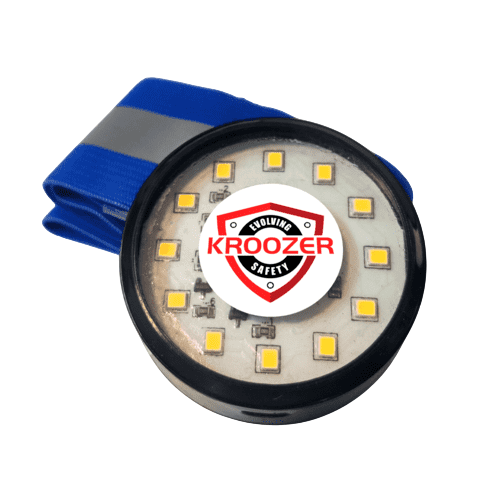
KROOZER has been making visibility gear in Jaipur since 2010, and we went the other way on purpose. The KROOZER Strobe Light for Bike V7.0 Pro with Brake Mode is a pair of pods, one per side, bolting on about 40 cm apart with an L-bracket and no drilling, roughly fifteen to twenty minutes with a push-button switch. That spacing is the point: two separated red points facing the traffic about to cross your line, giving a driver the width cue a single headlight cannot. Twenty selectable modes including a steady Always-On, and Brake Mode wires into your brake light so the pods fire when you brake. Sealed anodised aluminium, waterproof, universal fitment, one year warranty, 1,399 rupees, free shipping across India on orders over 1,000 rupees. The rest of the range sits in our strobe lights for bikes collection.
Kroozer strobes are auxiliary visibility lights. Rules on auxiliary lighting vary by state and by how the light is used, so check your local RTO guidance and ride considerately. The aim is to be seen, not to dazzle.
If you came looking for a side light, the useful answer is that your bike does not have a side problem. It has a width problem, and width is solved at the front.


