








Hazard lights on a bike do one job: they mark a stopped machine. Press the switch and all four indicators flash together, telling everyone nearby that this bike is not moving with the traffic around it. That is the entire message. On the shoulder of a dark highway with a flat tyre or a dead engine, it is exactly the message you want to send.
The trouble starts when riders borrow hazards for a different job: staying visible while moving, usually in heavy rain. It feels safer. Most of the time it is not, because a bike with hazards flashing cannot signal a turn, and the traffic behind you reads four blinking indicators as a stopped vehicle, not as a rider about to change lanes. Some traffic police have started issuing challans for exactly this kind of misuse. Here is how hazard lights earn their keep, where they work against you, and what to fit if what you really want is to be seen on the move.
Most bikes in India never came with a hazard switch
Cars have carried the red triangle button for decades. Motorcycles mostly have not. A few premium and touring machines ship with a factory hazard mode, but the commuters and 350s that fill Indian roads usually leave the showroom without one. The four indicators are there. The switch that fires them together is not.
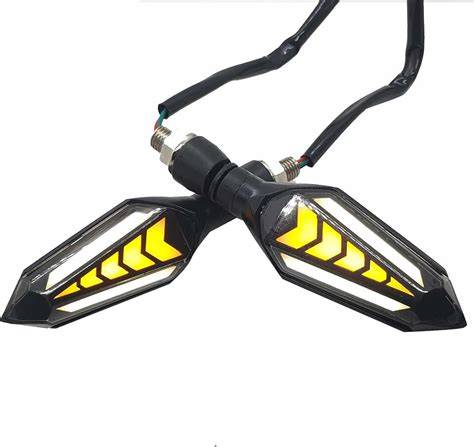
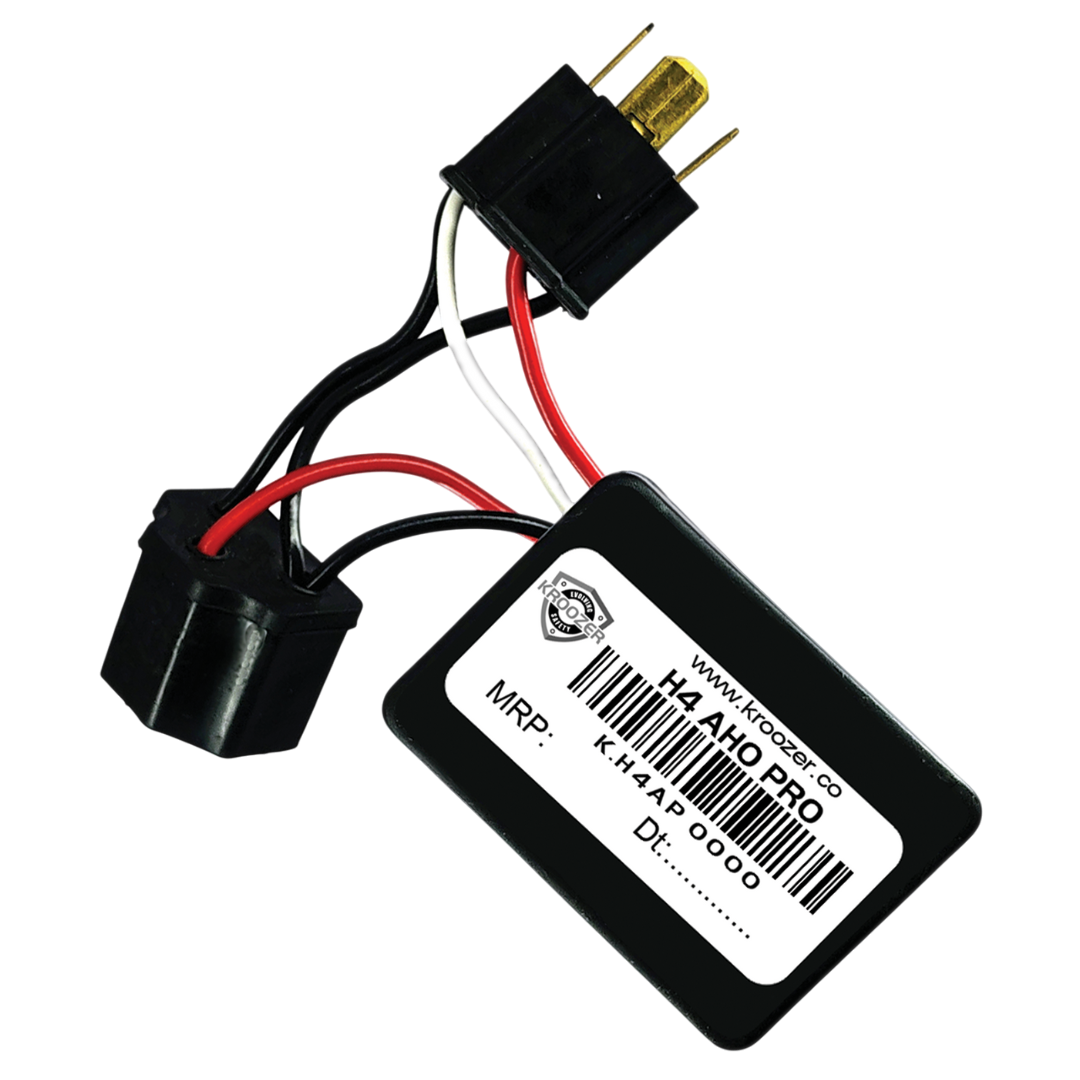
That gap created an aftermarket. A hazard flasher module wires into the indicator circuit and adds a switch, so all four blinkers can flash at once, and many modules offer extra patterns on top of the basic four-way flash. Fitting one is a small job for a competent mechanic. Build quality varies widely between brands, so buy from a seller who stands behind the product and have it wired in properly. Your indicators are a signalling system, not a place to save two hundred rupees.
When hazard lights genuinely help
Used the way they were designed, hazards are excellent. The pattern in every good use is the same: the bike is standing still.
- Broken down at the roadside. A puncture, a chain problem, an engine that will not start. Four flashing corners tell approaching traffic there is an obstacle ahead before headlights pick out the bike itself.
- Waiting out a cloudburst. If the rain gets heavy enough that you choose to stop under a flyover or at the road’s edge, hazards mark you while you wait. This is the correct rain use: stopped, visible, patient.
- Parked somewhere awkward after a breakdown. A blind curve, a narrow shoulder, a poorly lit stretch. If the bike must stand where traffic does not expect it, let it announce itself.
Why riding with hazards flashing works against you
Three reasons, none of them theoretical.
You lose your turn signals. The moment all four corners flash, no single indicator means anything. You cannot tell the car behind that you are about to move right to avoid a flooded patch. On a bike, in rain, that is the one message you most need to be able to send.
You confuse the drivers you are trying to inform. Motoring publications that have looked at this land in the same place. MotoDeal’s guidance on motorcycle hazard use is blunt: use them only at a stop, because in low visibility a driver closing in cannot tell a hazard flash from a turn signal, and guessing wrong causes crashes rather than preventing them.
Traffic police increasingly treat it as misuse. Zee News reported that Shillong Traffic Police began issuing challans for hazard lamp misuse under Section 177 of the Motor Vehicles Act, with fines of Rs 100 for a first offence and Rs 300 after that, and spelled out that hazard lamps exist to mark a vehicle standing at the roadside. Enforcement differs from city to city, and most riders will never be stopped for it. The direction is still clear: to the people writing the rules, hazards on a moving vehicle read as confusion, not caution.
So what do you actually do in heavy rain?
Ride like you are harder to see, because you are. Slow down, stay out of the blind spots beside trucks and buses, keep your brake light meaningful by braking early and smoothly, and leave the indicators free to do their real work. If the rain is bad enough that you feel invisible, treat that feeling as information: stop somewhere safe, put the hazards on, and let the worst of it pass. Chai breaks have saved more riders than any accessory.
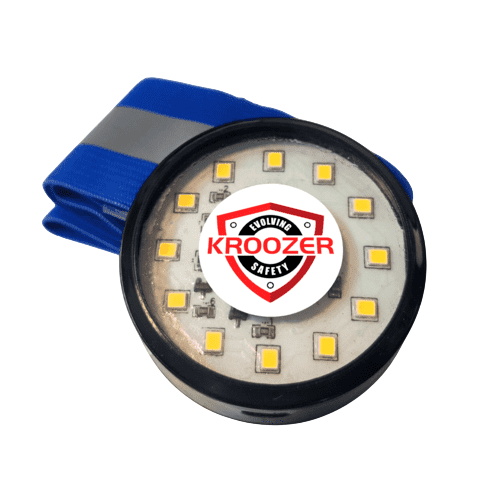
And if being seen on the move is the real goal, fit lighting built for that job instead of borrowing your indicators. A dedicated auxiliary strobe such as the KROOZER STROBE V7.0 Pro runs as its own pair of rear-facing lights, completely separate from the indicator circuit, so you stay conspicuous in traffic while every turn signal keeps its meaning. It gives you 20+ selectable patterns and a brake mode that reinforces your braking, and your hazard switch stays free for what it is actually for. We have written before about what a strobe light on a bike actually does if you want the full picture.
Quick answers
Is it OK to ride with hazard lights on in the rain?
It is a bad habit even where nobody fines it. You give up your turn signals, and the traffic behind cannot tell if you are stopped, turning, or just wet. Slow down, position yourself where you can be seen, and save the hazards for when you stop.
Do bikes come with hazard lights from the factory?
Most Indian motorcycles do not. Some premium and touring models include a hazard switch, and everyone else relies on aftermarket flasher modules wired into the indicator circuit. Fitted properly, they work fine for their intended purpose: marking a stationary bike.
Hazard flasher or strobe light: which should I fit?
They answer different questions. A hazard flasher makes your existing indicators flash together and is for a stopped bike. A strobe light is a separate pair of lights that keeps you conspicuous while riding, without touching your indicators. Our guide to brake light flashers versus strobe lights walks through the differences in detail. Many riders sensibly end up with both: hazards for breakdowns, a strobe for the daily ride.
Will I get fined for using hazard lights while riding?
It depends on where you ride. Shillong’s traffic police announced challans for misuse, other cities have warned about it, and rules on how lights are used vary by state. The practical answer is simpler than the legal one: use hazards for a standing bike, indicators for turns, and dedicated auxiliary lights for visibility, and the question stops mattering.
Be visible. Be home.


