








Search “strobe light for bike” in India and the first screen offers you something at ₹30, something at ₹1,399, and a bicycle lamp at ₹4,000 sitting between them. Same two words on every listing.
Most people read that as a quality ladder. It is not one. It is three or four unrelated products sharing a name, and until you separate them the price question has no answer.
So here is the answer in plain rupees, then the part that never appears on a listing: where the money actually goes, and what the light costs you after you have paid for it.
The bands, in rupees
For a motorcycle, almost everything on sale in India sits in one of three bands.
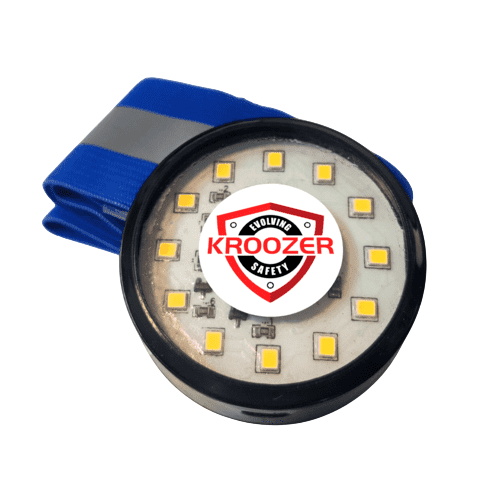
Under ₹250. A small self-contained pod with a cell inside it. Charge it over USB, stick it on with adhesive or strap it, press the button. These are sold for bicycles, helmets and drones as much as for motorcycles, and very often sold as a single unit rather than a pair.
₹250 to ₹700. The same idea with a better shell, more colours, sometimes a small remote. Still running off its own cell. Still stuck on rather than bolted on.
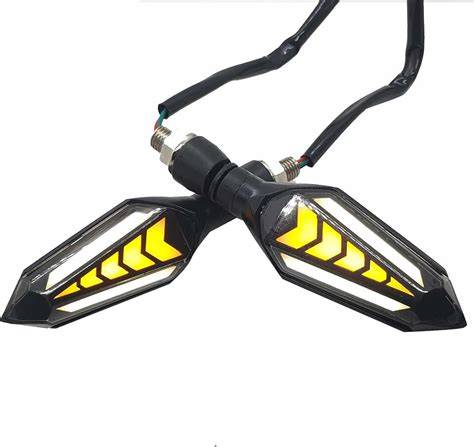
₹1,200 to ₹1,500. Wired into the motorcycle. There is a loom, a switch and a bracket, and it arrives as a pair. Nothing to charge.
Two things also show up in that search and are not motorcycle strobes at all: bicycle headlamps at ₹4,000 and above, and helmet blinkers. If the results confused you, that is why, and we pulled the naming apart in what a strobe light on a bike actually is.
Which band suits you is a different question from what they cost, and it has its own answer in which bike strobe light is best. This page is only about the money.
Where the money goes
Riders assume the jump from ₹200 to ₹1,400 is buying brightness. Mostly it is not. Here is the honest breakdown from the manufacturing side, because we are the ones paying these bills.
The bracket. An adhesive pad costs a few rupees. A bracket has to be cut, folded, drilled and finished, and it has to land correctly on a bike nobody described to the factory in advance. That one part often costs more than the LED sitting on it, which is the reverse of what most buyers assume they are paying for.
Keeping water out. Sealing a small housing that also has to let light out and wire in is the expensive problem in this entire product. Solving it with an anodised aluminium body and a sealed, weather-resistant housing costs real money at the tooling stage. Solving it with a rubber flap costs nothing. You can usually tell which decision was made by picking the thing up.
The loom and the switch. A harness that sits beside a hot engine, gets shaken every day for years and still makes a clean connection in the rain is a designed part with a real bill attached. It never appears in a product photograph. In a battery-powered clip-on it does not exist at all, and that absence is a large share of the price gap.
Two pods instead of one. A pair does not cost quite twice what a single unit costs, but it is not far off, and plenty of cheap listings quietly ship one pod for exactly that reason. Count the pods in the listing text, not in the photograph.
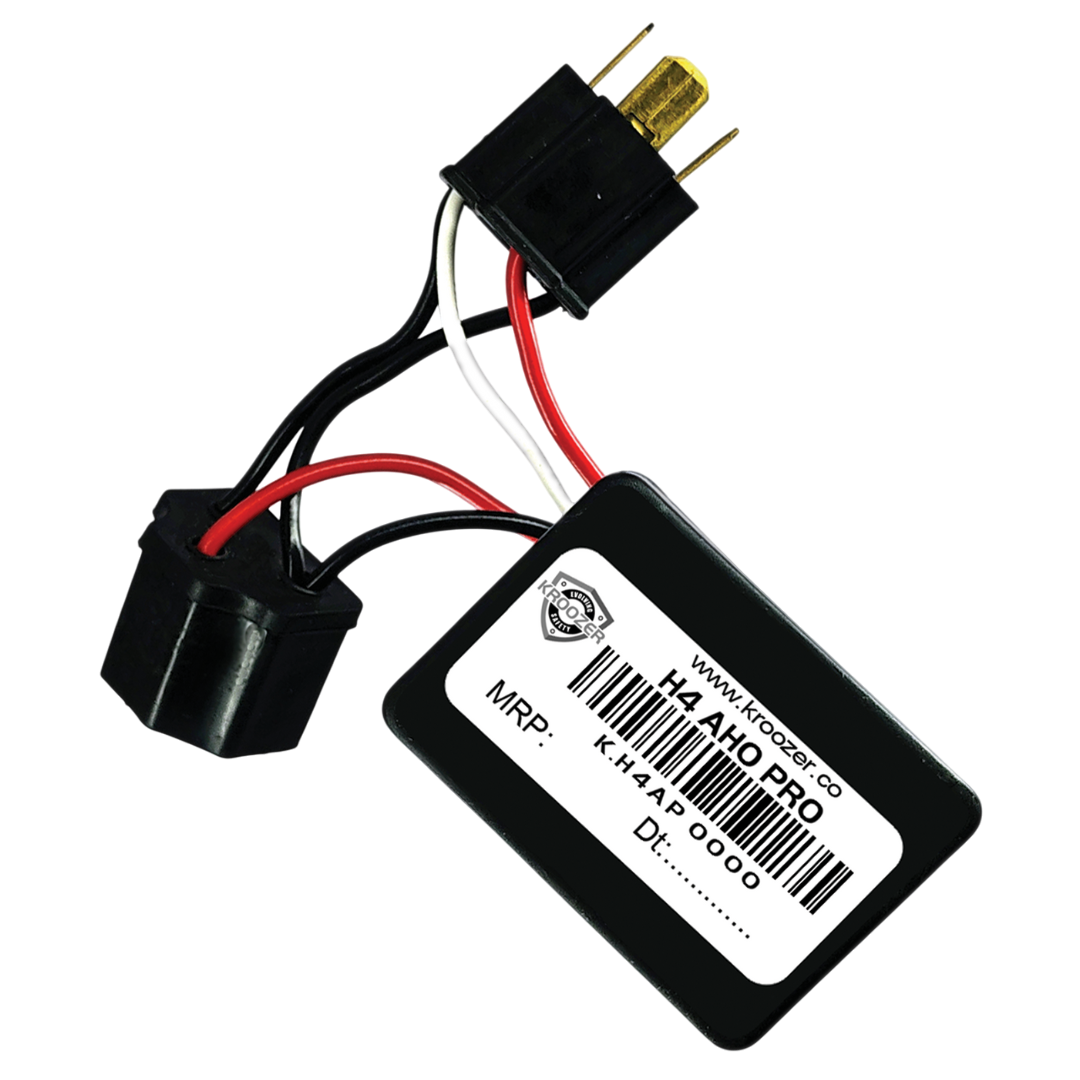
Behaviour rather than components. Spending more can buy the light a second thing to do. Our V7.0 Pro has Brake Mode: the pods are wired into the brake light, so they fire when you brake, on top of the flash patterns they already run. That needs a circuit and a wiring point, which is engineering rather than parts, and engineering is the cost that does not fall away in bulk.
A warranty somebody has to honour. A year of cover is a real liability on a manufacturer’s books and it gets priced in. That is part of why lights sold with no warranty are cheaper, and why the saving is not free.
The cost that is not on the listing
This is the part that changes the arithmetic, and no product page shows it.
Fitting. If you cannot do it yourself, a workshop will charge you, and a kit that wants drilling or splicing costs more to fit than one that bolts on. Ours takes about 15 to 20 minutes with basic spanners, which is why most owners do it at home on a Sunday.
How often you buy it again. Do the sum for your own riding. If you find yourself replacing a ₹150 clip-on twice a year, that is ₹300 every year, and across three or four years of daily use the cheap option stops looking cheap. The sum flips completely if you ride at night once a month. That is the real point: the right price depends on how hard you will work the thing.
The one that goes missing. Adhesive, a rough road and a public parking spot separate a lot of riders from their lights, and a replacement is another ₹150 you had not planned on. A bolted bracket does not walk off.
The cheapest lights on the page
The multi-colour red and blue units at the very bottom of the price list deserve a separate word, and it is not about quality.
The trouble with them is not that they cost ₹30. It is what they imitate. Fast alternating red and blue is the visual grammar of an emergency vehicle, and a driver who reads your bike that way does something other than give you room. You want the car behind you thinking “motorcycle, closer than I thought”, not “pull over”.
Worth saying plainly: strobes on a motorcycle are auxiliary visibility lights. Rules on auxiliary lighting vary by state and by how the light is used, so check your local RTO guidance and ride considerately. We went through that question properly in are blinking lights legal in India. Pick something that makes you noticeable rather than something that dazzles the person behind you.
What ₹1,399 gets you
Ours, so read it with that in mind.
The KROOZER Strobe V7.0 Pro with Brake Mode is ₹1,399 and comes as a pair. 20+ selectable patterns on a push-button switch, Brake Mode wired into the brake light, a bolt-on L-bracket with one pod per side roughly 40 cm apart, no drilling, about 15 to 20 minutes to fit. Anodised aluminium, sealed and weather-resistant. It fits all motorcycles. One year warranty, made in India, and free shipping across India on orders over ₹1,000. The rest of what we build sits on the strobe lights page.
So is that a fair price?
If the light has to be on the bike every single ride without you thinking about it, the wired band is where you are shopping, and ₹1,399 sits in the middle of that band rather than at the top of it. Compare on the bracket, the sealing, whether it arrives as a pair and whether it reacts to your brakes. Judge any price in that band on those four things and it will start making sense, or stop making sense, fairly quickly.
If the light is for a bicycle, a helmet, a tail bag or the occasional night ride, buy the ₹150 one and keep it charged. Spend the difference on fuel. We would rather tell you that than sell you something you do not need.
Either way the job is identical, and it costs less than most riders expect. You are not buying a bright light. You are buying the half second in which the driver behind you works out there is a motorcycle ahead.


