





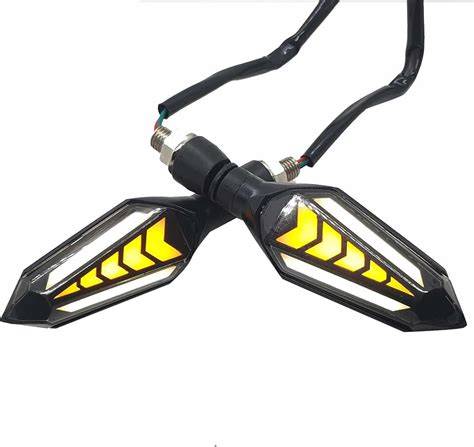



Search for a number plate light for your bike and you get a wall of listings. Chrome strips, coloured LEDs, twin units with turn signals built in. What you do not get on the first page is an answer to the question underneath the search: what is this lamp actually for, and does a better one make you safer?
Short answer first: it makes you readable, not visible. Those are two different jobs, and mixing them up is how riders spend money on the wrong lamp and feel no safer for it.
It is a reading light, aimed at your paperwork
Think about what every other lamp on your bike is doing. The headlamp throws light out at the road so you can see it. The tail lamp and the indicators throw light back at other people so they can read you. The number plate light does neither. It points down and inward, onto a flat rectangle sitting a hand’s width away, and its whole purpose is to keep the characters on that rectangle legible to someone who is already right behind you.
That is a small and slightly odd optical job. The surface is flat, pale and very close, and the viewer is not a driver far back in traffic but a person or a camera at arm’s length. A lamp doing it well lays an even wash across the whole plate, soft and low, with no bright blob in the middle and no dark corners. Evenness is the game. Output is almost beside the point.
Which is exactly why the usual upgrade instinct goes wrong here.
More light on the plate does not buy you a signal
Look at where the lamp sits. Just below your tail lamp, pointing at a surface just below that. Any extra light you put there lands in the same place as light that is already there. The driver behind you is not failing to notice your bike because your tail lamp needs company slightly lower down.
Two things make the back of a motorcycle easier to read at a glance. The first is separation. Two sources with a gap between them give an eye a width to measure, and that width grows as he closes on you, which is how a driver judges how fast he is catching up. One lamp in the middle gives him nothing to measure, and a second glow nestled under it does not change that. The second is change. Something that alters reclaims a glance in a way a steady light never does, which is the same reason a daytime running light earns its place while a strip stuck to the headlamp shroud does not.
A plate lamp offers neither. It is in the wrong place, it is steady, and it is aimed at the ground. Nothing wrong with that, it is doing its own job properly. It is simply not a safety upgrade, and no amount of extra brightness turns it into one.
The colour trap, and this one bites people
A number plate lamp is white, and it should spill downward onto the plate rather than backward into the eyes of anyone following you. Plenty of cheap illuminated-plate kits are built the other way round, with the diodes facing out at the traffic behind.
That matters more than it sounds. Colour and position are how a driver works out which way a vehicle is pointing. White means the front of something, red means the back of it. Put a bright white glow at the rear of your bike and you hand the driver behind you a message that reads as headlights coming towards him. He will work it out, but he will spend a beat doing it, and a beat is the thing you were trying to buy. We went into this in more detail in our piece on what the colour of a light tells drivers.
What goes wrong on real bikes
Four failures turn up again and again, and none of them are about how bright the lamp is.
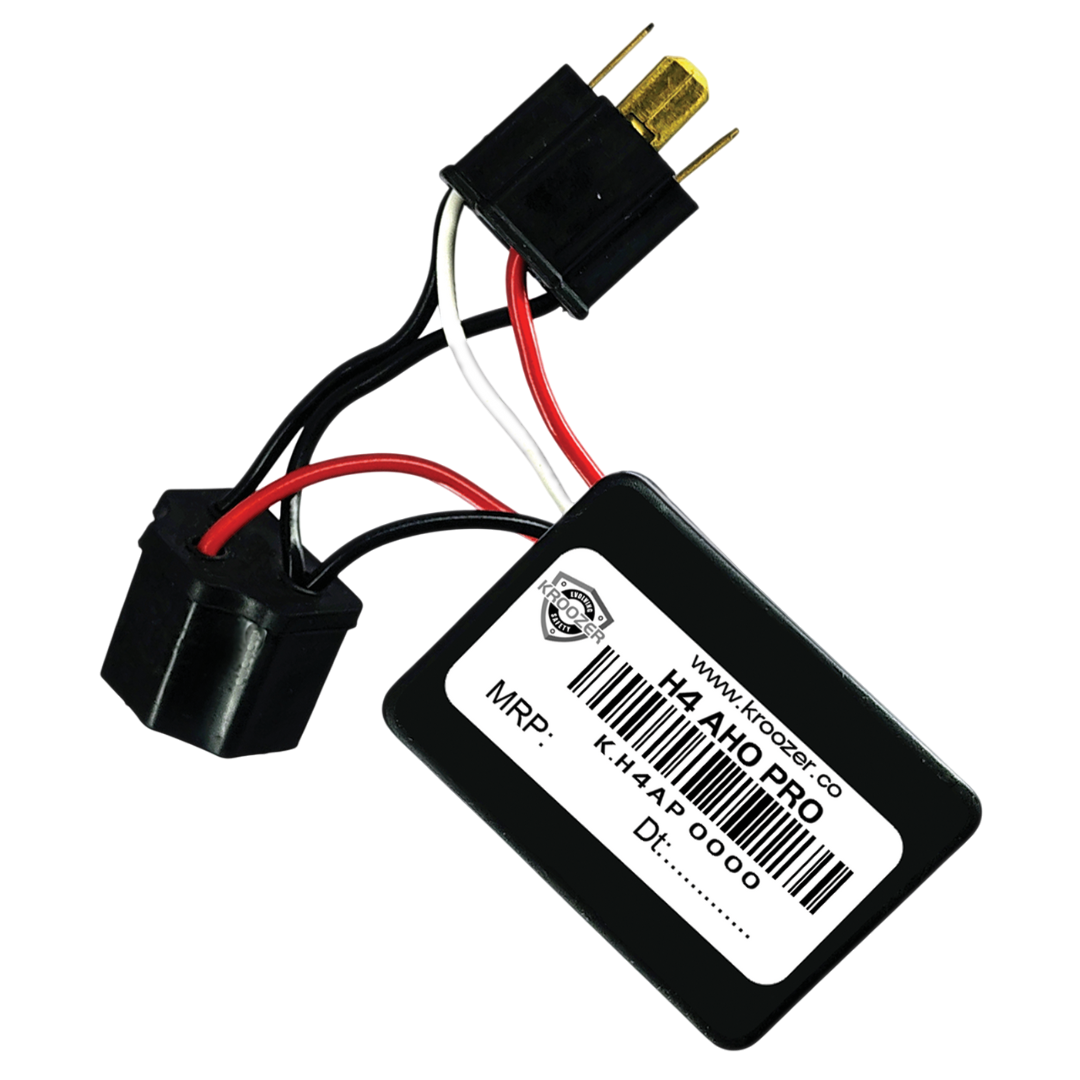
It is on the wrong circuit. A plate lamp should come on with your position lamps and stay on. Kits get tapped into whatever wire was convenient, and then the plate goes dark except when the rider brakes, or lights up with the indicator, or glows brightest with the ignition off.
The bracket casts a shadow. Fancy housings and twin units often sit proud enough to throw a hard band of shade across the top of the plate, or cover a corner of it outright. You have made the plate harder to read with a lamp fitted to make it easier.
There is too much light. A plate surface is made to bounce light back. Flood it and it blooms, the characters wash out, and a camera sees a white smear. This is the one place on your bike where turning things up actively makes the result worse.
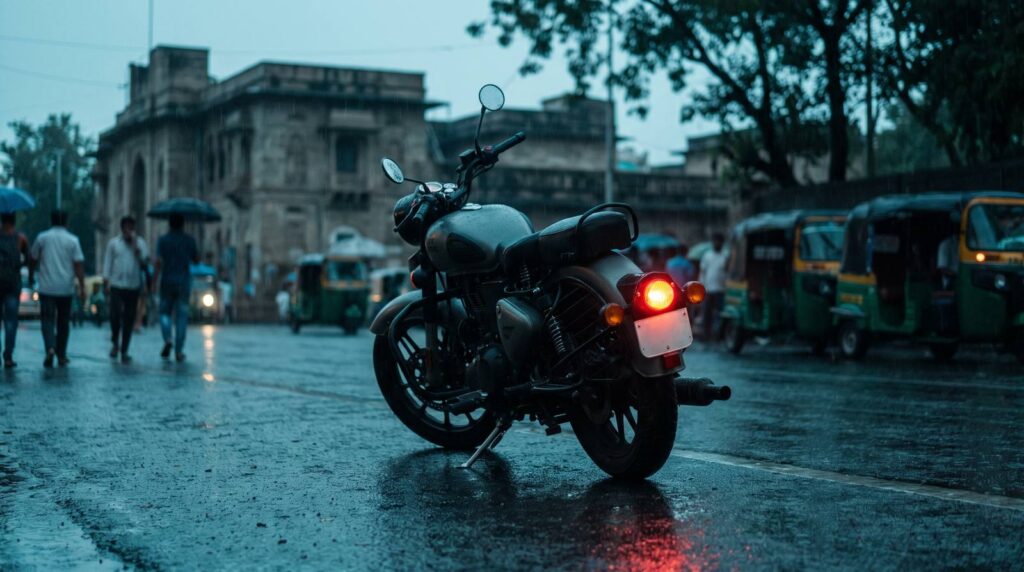
Water and vibration get it. No lamp on your bike lives in a worse neighbourhood. It sits lowest, nearest the rear wheel, and takes every puddle and stone the road throws up. Most plate lamps die of a wet joint or a cracked lens, not a dead diode.
If you are replacing one
Four things, in this order. It aims down at the plate, not out at traffic. It spreads evenly rather than punching a hot spot. It is properly sealed, because of where it lives. And it runs on your position lamp circuit, so it is lit whenever the bike is. If a housing covers any part of the plate, pick a different housing.
That is the whole specification. A modest part doing a modest job, and a good one costs very little.
What does make the back of your bike worth a second look
If what you actually want is for the driver closing on you to register your bike sooner, the answer is red, separated and changing, and it does not live on your number plate.
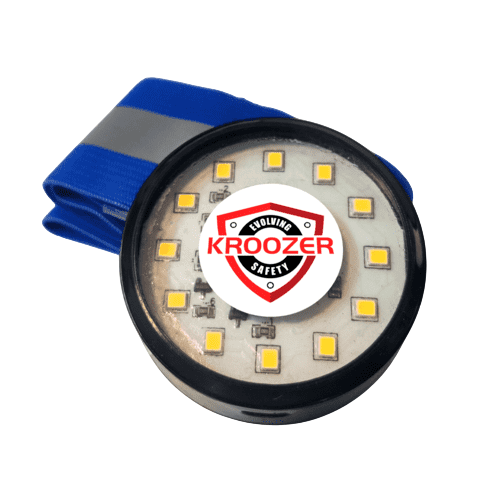
That is the shape of the KROOZER Strobe Light for Bike V7.0 Pro with Brake Mode. It is supplied as a pair, one pod on each side roughly 40 cm apart, which is the separation a single central lamp cannot give you. It carries exactly 20 selectable modes on a push-button switch, including a steady Always-On mode for riders who would rather add presence than movement. Brake Mode wires into your brake light, so the pods fire when you brake as well as running their pattern. The housing is sealed anodised aluminium and it is waterproof, which, as above, is not a small thing on the rear of a bike.
Fitting is a bolt-on L-bracket, one pod per side, no drilling, and most riders are done in 15 to 20 minutes. It fits all motorcycles. It is made in India, it is ₹1,399, and it carries a one year warranty. Shipping is free across India on orders over ₹1,000, and we are happy to send one overseas, with the shipping cost quoted to you after you order. See it and the rest of the range on our strobe lights page, and if being seen after dark is the real problem, start with our guide on being more visible at night and in the rain.
One last word on the rules
Keep your plate clean, uncovered and readable. On anything you add beyond the factory lamps, the rules on auxiliary lighting vary by state and by how the light is used, so check your local RTO guidance and ride considerately. The point of all of it is to be seen, not to dazzle the person behind you.
Your number plate light is doing its job. It just was never the lamp that was going to keep you safe.


