









Ask ten riders how to be more visible and nine will name a product. A brighter bulb, a louder jacket, one more light. The real answer is less tidy: visibility is a stack. What you wear is one layer. What your bike shows is the second. Where you place yourself on the road is the third. Any single layer can fail on a wet night; the full stack rarely does.
The short version, up front: wear something reflective that moves when you move, make sure your bike shows light at both ends whenever the engine runs, give the rear of your bike a light source that does more than glow, and ride where drivers and their headlights are actually looking. Everything below is detail on those four moves.
Start by assuming you have not been seen
Most of us treat visibility as a brightness contest. It is closer to an attention contest. A driver pulling out of a side road scans for the shapes they expect, and the shape they expect is a car. A motorcycle is narrow, its lone headlamp can read as a car much further away, and in traffic it hides inside the clutter of bigger vehicles. The phrase crash investigators use is “looked but failed to see”. The driver’s eyes passed over the rider. Nothing registered.
That is why the stack matters. Each layer is a separate chance to register: on a mirror, in the corner of an eye, through a rain-smeared windscreen.
Layer one: what you wear
Start with the helmet. A white or light-coloured lid sits at a car driver’s eye height and contrasts against tarmac, trees and night sky far better than black does. If you are due a replacement anyway, colour is the cheapest visibility upgrade you can buy.
Then put reflective material on the parts of you that move. Ankles, wrists, the back of the helmet. Human eyes are wired to notice motion, and a reflective band on a moving ankle flickers in a car’s headlights in a way a static panel never does. We wrote up how reflective bands behave at night, including where they fail.
Black riding gear is not a sin. Most of us wear it. Just make sure something on it gives headlights a surface to bounce off: piping, patches, a strip across the back protector.
Layer two: what your bike shows
Clean your lamps. A monsoon film of grime over the tail lamp dims it more than you would expect, and it builds so gradually you never notice. Ten seconds with a cloth before a night ride is free visibility.
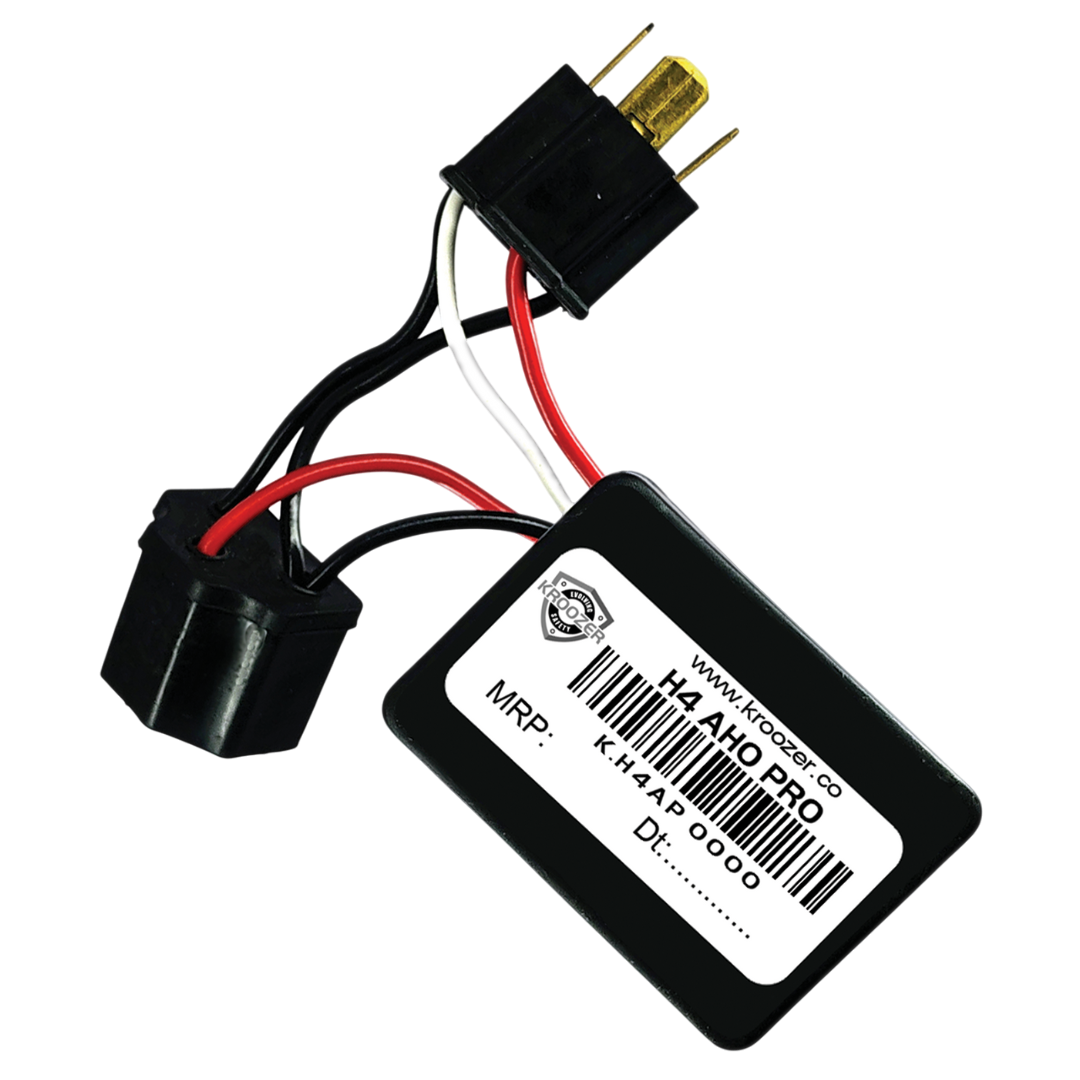
Every new bike sold in India since April 2017 has AHO, so your headlamp stays lit whenever the engine runs. That covers the front. Our AHO switch explainer goes through what that switch on older bikes actually does.
The rear is where the stack is thinnest. From behind, a bike at night is one small red glow, and that glow only changes when you brake. It says nothing while you hold a steady line, which is exactly when a tired driver is closing in on you. Whether a flashing light fixes that is a fair question, and we answered it carefully in are flashing bike lights safer: a flash wins attention, a steady light helps a driver judge closing speed, and the strongest setup is both together.
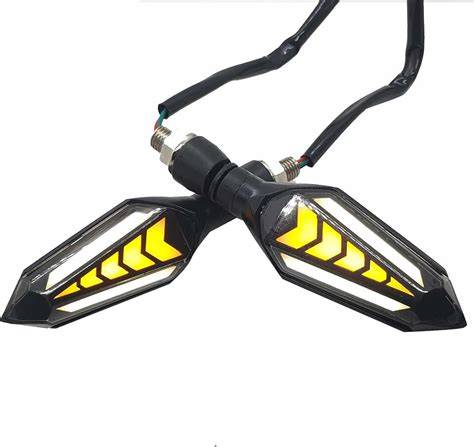
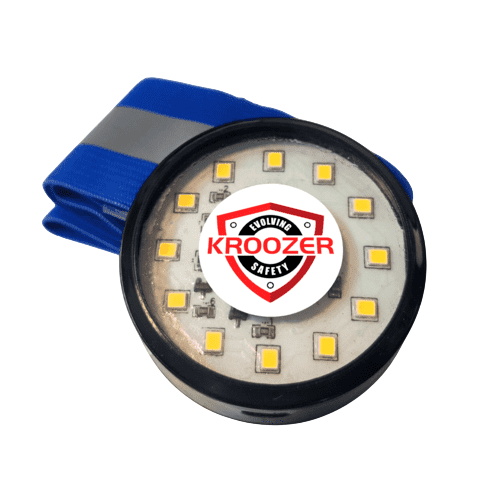
That is the gap the KROOZER STROBE V7.0 Pro was built to close: a pair of small sealed pods, one low on each side of the rear, with 20+ selectable patterns and a Brake Mode that flashes the pair the moment you press the brakes. Two extra red points, placed wide and low, give a driver a second and third thing to register. Rs 1,399 for the pair, one year warranty, and fitting is a bolt-under-existing-bolts job on any motorcycle; the step-by-step install guide walks through it.
Layer three: where you sit on the road
Position beats brightness more often than riders admit. Ride where mirrors actually point. If you cannot see a driver’s face in their mirror, they cannot see you, so move until you can. Do not sit alongside a bus or truck at speed; that lane is their blind spot, and no light output fixes being physically outside a driver’s field of view.
At junctions, small movements help. A slight weave within your lane as you approach a waiting car changes your outline and breaks the distant-car illusion. It feels silly. It works.
In fog, resist the hazard switch while you are moving. Flashing all four indicators tells the driver behind you nothing about which way you are about to go, and we covered the detail in hazard lights on a bike. Slow down to match your sight line, and keep clear of the road edge where a stopped truck may be hiding.
Rain rewrites the rules
Rain takes a driver’s vision apart three ways at once. The windscreen smears between wiper arcs, spray from bigger vehicles hangs in the air like a curtain, and every light source grows a halo that swallows detail. A driver who would spot you easily on a dry night may catch only fragments of you in a downpour. Ride like it: leave more room than feels necessary, stay out of spray clouds, and hold a position where your lights and reflectives can actually be seen.
Quick answers
Does a white helmet really make a difference?
Yes. It sits at a car driver’s eye height, it contrasts with the road and the dark, and it costs nothing extra at replacement time. It is the easiest layer to add.
My bike has AHO. Is that enough?
It covers the front. The rear of your bike still shows only a tail lamp, which is the weakest point of the stack at night. A brake-linked rear light or a strobe pair is the layer that closes it.
Should I ride with hazards flashing in heavy rain?
Not while moving. Hazards hide your indicators exactly when you need them, and traffic behind you cannot tell a slowing rider from a stopped one. Park somewhere safe and wait out the worst of it instead.
What do the rules say about fitting extra lights?
Rules on auxiliary lighting vary by state and by how the light is used, so check your local RTO’s guidance before you fit anything. Keep added lights aimed low and use them to be seen, never to dazzle oncoming traffic. Our read of the rules on blinking lights in India goes through it in detail.
None of this asks for much money. Clean lamps, a reflective band, a smarter lane position: most of the stack is habit. Add one good layer at the rear, the side of the bike that has the least to say on its own, and the stack is complete. Be visible. Be home.


