








Search “strobe light for bike” and the first screen offers you something at ₹99 and something at ₹1,399. Same words. Same photo of a red light flashing on a tail. Fourteen times the price.
That gap is not a quality ladder. It is two different products wearing one name.
Once you see the split, “which one is best” stops being a hard question. It becomes a question about your bike and your riding, and you can answer it yourself in about a minute.
The split: does it run off your bike, or off its own battery?
Almost every strobe light sold in India falls into one of two camps.
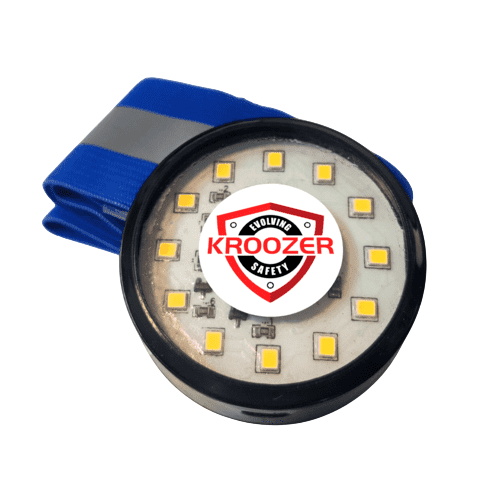
Self-contained. A small pod with a rechargeable cell inside. You charge it over USB, stick or strap it somewhere, press a button. No wiring at all. These are the ones in the ₹50 to ₹400 band, usually listed as “aircraft lights” or “7-colour blinkers”, and sold for bicycles, helmets and drones as much as for motorcycles.
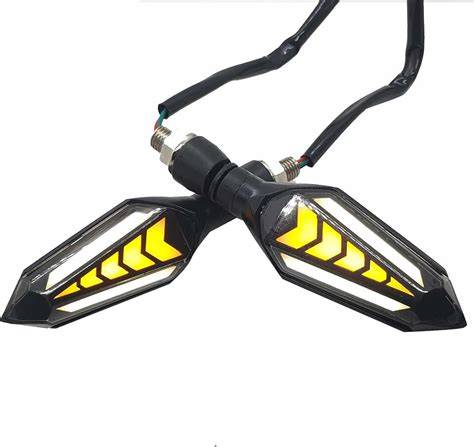
Wired in. The light takes power from the motorcycle itself. There is a loom, a switch and a bracket. Nothing to charge, nothing to remember, nothing to take off and lose. This is the ₹1,200 to ₹1,500 band.
Colour, patterns, housing, brightness: everything else people compare on sits downstream of that one decision.
When the cheap one is the right call
Let us be honest about this, because we sell the expensive kind.
A self-contained clip-on is the better buy if you are lighting a bicycle, if you want something on your helmet or your backpack, if you need a marker to keep in the tail bag for a puncture at night, or if you ride after dark only occasionally and mostly on lit roads.
For those jobs ₹1,399 is money you do not need to spend. Buy the ₹150 one, keep it charged, done.
Where clip-ons come apart is daily use. You forget to charge them. The adhesive gives up on a bad road. They walk off in a parking lot. And on a wet highway run, the moment you actually want the thing is usually the moment you discover the cell died somewhere back near Kishangarh.
That is not a knock on the product. It was never built to be permanent.
When wired-in earns its money
You want the wired kind when the light has to be there without you thinking about it. Daily commute in traffic. Highway runs. Monsoon. Winter fog on the NH.
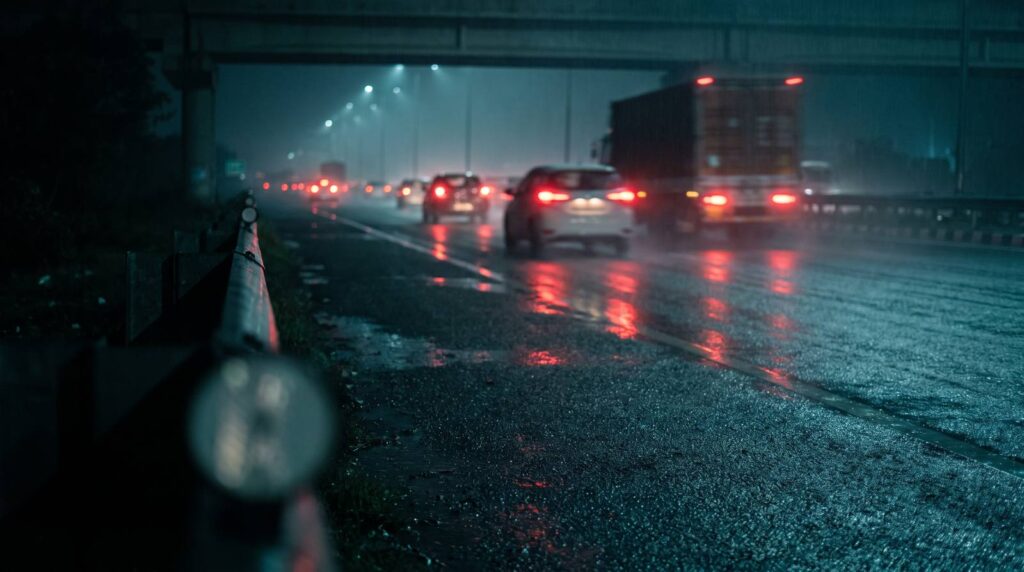
In all of those the risk is not that you cannot see. Your headlight handles that. The risk is that the driver behind you has not yet registered that there is a motorcycle ahead. Being seen, not seeing. That is the whole job.
A wired light is ready every ride with no charging routine. It sits on a bracket rather than on a pad of glue. And it can do something a self-contained pod structurally cannot: react to your brakes.
Taking power from the bike does raise the obvious worry, and riders ask us constantly, so we answered it properly in do strobe lights drain your bike’s battery. Short version: while you are riding, no.
The question almost nobody asks
Does it do anything when you slow down?
Most strobes run a pattern on a loop. Useful in fog, but the loop is identical whether you are cruising or hauling on the brakes. The car behind you gets no new information at the one moment new information matters.
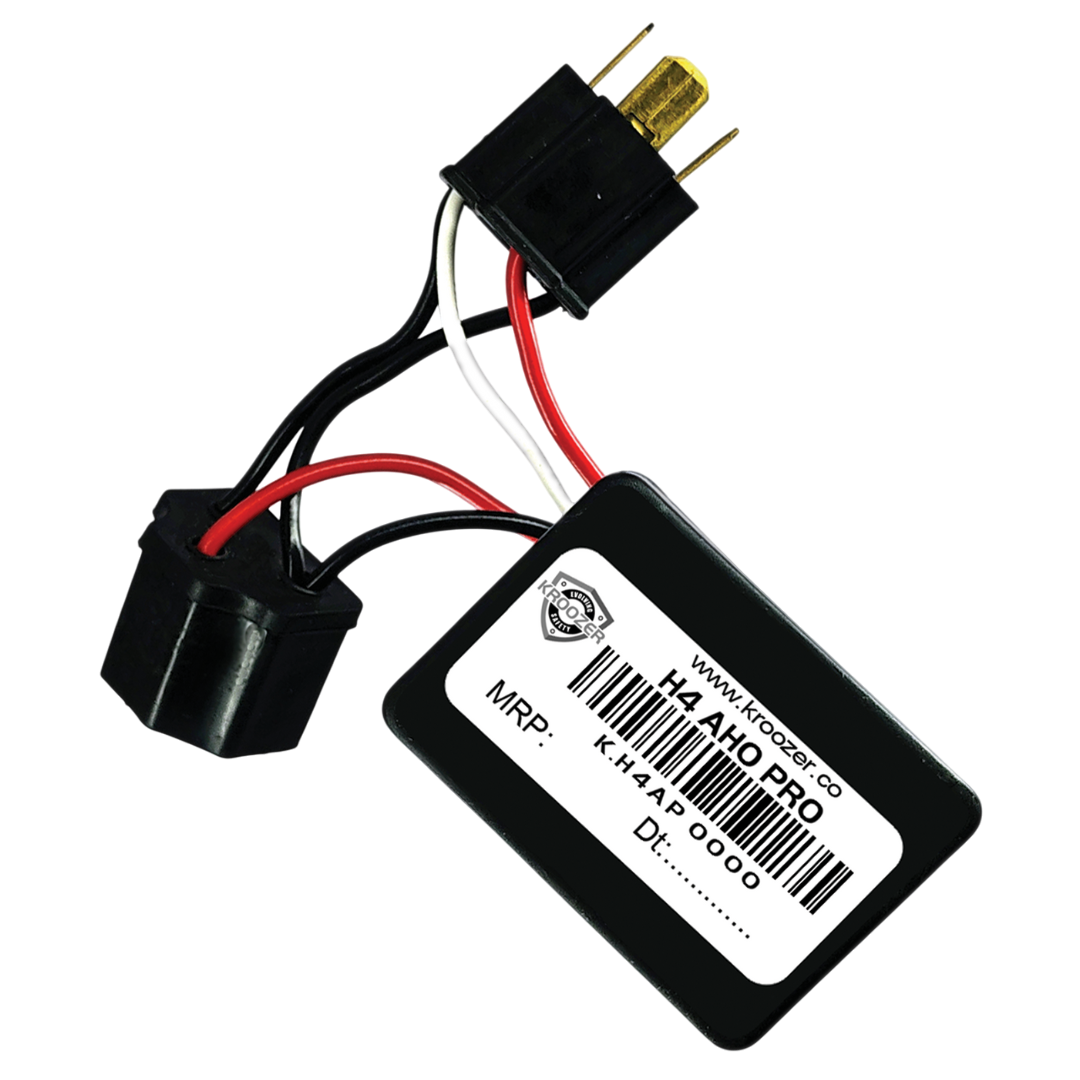
A light wired into the brake circuit does. Our V7.0 Pro has a Brake Mode: the pods are wired into the brake light, so they fire when you brake, alongside the flash patterns they already run. Squeeze the lever and the back of your bike changes. That change is what a following driver actually reads.
This is also the thing people mix up most often, and the two products genuinely are not interchangeable. We pulled that apart in brake light flasher vs strobe light.
What to check before you spend anything
Short list. Works for any brand, ours included.
Is it a pair? One pod on one side reads as a broken lamp. Two, spaced apart, read as a vehicle with width. Check what actually arrives in the box, not what the photo shows.
How does it mount? Bracket or adhesive. Adhesive is fine on a helmet and poor on a bike that lives on Indian roads. Ours is a bolt-on L-bracket, one pod per side, roughly 40 cm apart, going on under bolts that are already there. No drilling.
Can you turn it off? You will want to. Not every road and not every situation calls for something flashing behind you. Ours runs from a push-button switch with 15+ selectable patterns, so you can keep something calm for city traffic and save the busier ones for fog. Which pattern to use when is worth a bit of thought, and we went through it in who should avoid strobe lights.
What is the housing made of? Anodised aluminium and a sealed, weather-resistant housing will take a monsoon and a pressure wash at the corner shop. Thin plastic with a rubber flap will not, whatever the listing promises.
Is there a warranty, and is there anybody to honour it? A marketplace seller with no name on the box is nobody to go back to in March. Worth asking before, not after.
So which is best?
If the light needs to be permanent and ready every single ride, you want the wired kind. From there it comes down to one thing: whether it does anything under braking.
If it needs to be portable or occasional, or it is going on a bicycle or a helmet, buy the cheap self-contained one. Save your money for fuel.
Where we sit: the KROOZER Strobe V7.0 Pro with Brake Mode is ₹1,399, supplied as a pair, with a one-year warranty. Made in India, in Jaipur, by people who ride. Fitting takes about 15 to 20 minutes with basic spanners and no drilling. Free shipping across India on orders over ₹1,000. The rest of what we build is on the strobe lights page.
One last thing, because it comes up every time. Strobes on a motorcycle are auxiliary visibility lights. Rules on auxiliary lighting vary by state and by how the light is used, so check your local RTO guidance and ride considerately. Pick a pattern that makes you noticeable rather than one that dazzles the person behind you. Being seen is the entire point. Blinding somebody is the opposite of it.


