







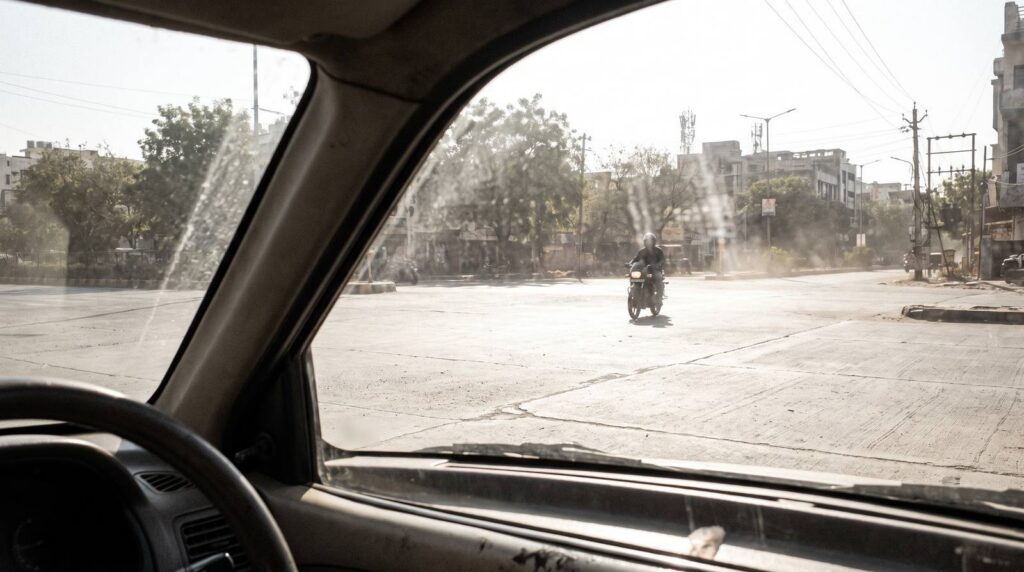
Fit a daytime running light to a car and you are solving a real problem. A car’s headlights are off in daylight, so a pair of white strips come on with the engine and give everyone else something to look at. That is the whole reason DRLs were invented.
Now look at your bike. If it came out of an Indian showroom any time in the last few years, the headlight lit up the moment you pressed the starter, and there is no switch to turn it off. So before you spend anything, the useful question is not which DRL to buy. It is what a DRL adds to a headlamp that never goes out.
What a DRL is, and the one job it has
Daytime running light. One purpose: being seen in daylight. It is not there to light the road, which is your headlamp’s job, and it is not there to say anything, which is what your indicators and brake light do. It faces forward, at the people you are about to meet, and it runs whenever the engine runs.
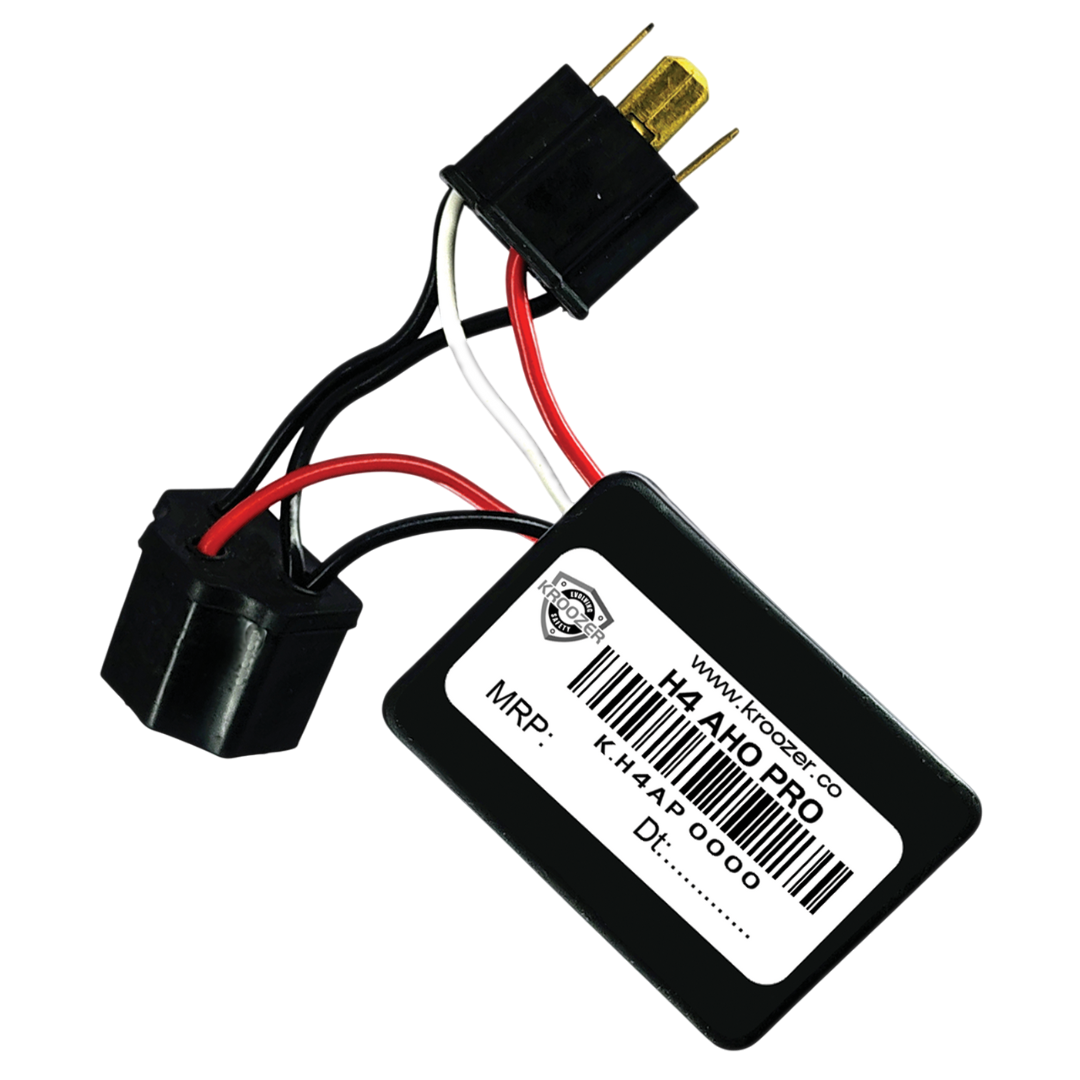
On a car there is a gap for it to fill. On an Indian two-wheeler, mostly there is not. Automatic Headlamp On has been built into new two-wheelers sold here since 2017, so the headlight is wired to the ignition and stays lit all day. If that is new to you, we wrote about what an AHO switch is and whether your bike should have one.
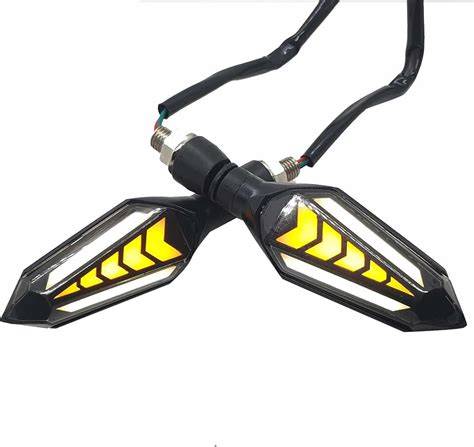
This is why plenty of riders fit DRL strips and then quietly notice nothing. Almost everything sold as a DRL light for a bike is a thin flexible LED strip that goes on or beside the headlamp shroud, which puts a small steady light right next to a much bigger steady light. Standing on the pavement looking at your own bike, it is lovely. From the seat of a car waiting to turn across you, it is inside the glare of the lamp it is stuck to.
Daylight is a contrast problem, not a power problem
In daylight a driver’s eyes are set for a bright sky and a bright road. Everything in front of him is already lit, so a light is only picked up when it is hard to confuse with that background. Brightness is a poor way to win that argument, because the sky will always outbid you. Two things do win it: separation, and change.
Separation first. Two light sources with a gap between them read as a width. One light tells a driver that something is out there. Two tell him how wide it is, and the gap grows as you come closer, which is how he works out whether you are far off and gentle or close and quick. A motorcycle with one lamp in the middle gives him nothing to measure, which is the oldest problem in motorcycle visibility and the reason cars pull out in front of riders in broad daylight. Adding more light in the same place does not touch it.
Change second. Anything that alters between two glances gets looked at again. A steady strip beside a steady lamp just looks like a bigger lamp, while something that was not doing that a second ago makes a driver check what he is seeing. That is a different mechanism from being bright, and it keeps working when the sun is high.
So a daylight light earns its place one of two ways: by sitting somewhere your headlamp is not, or by doing something your headlamp cannot. Most strips sold as DRLs do neither.
Can you ride with a DRL at night?
You can, it does less than you would hope, and it can quietly cost you something. After dark the problem turns over: against a dark background nearly any light is visible, so extra white glow buys very little. What it can do is crowd the signals that matter. A white strip next to your indicator makes the amber harder to separate out at the exact moment you need somebody to read it. A signal only works if it is the thing that changed.
The other cost is aim. A strip stuck on by hand points wherever the tape ended up, and if that is anywhere above level you are now doing to oncoming riders the thing you complain about when it is done to you. If your strips have a dim setting or an off position, use it after dark. Being seen and dazzling people are not the same project.
Five things to check before you buy one
- What does it run off? Many cheap kits tap the pilot or parking wire, so they are at their brightest with the engine off and get swallowed once the headlamp is lit. Some tap the indicator feed, which means your DRL flashes every time you signal and tells drivers nothing clear at all.
- Where can it actually go? If the only place it fits is the headlamp shroud, it is trim, not visibility. If it can go wide, out near the forks or the crash guards, it is at least buying you width.
- Is it steady, or is it a show? Chasing and sequential strips are sold as DRLs and are built to be looked at in a parking spot. Movement inside one small strip is not the same as a light a driver notices from further down the road.
- What colour faces forward? White or amber, nothing else. Red pointing forward tells a driver he is looking at the back of something, which is a dangerous sentence to say by accident. Blue belongs to other vehicles entirely.
- Will it survive? Adhesive strips on a shroud live in heat and road spray. Check how the wiring is sealed where it enters, because that is where these kits die first.
What does work in daylight
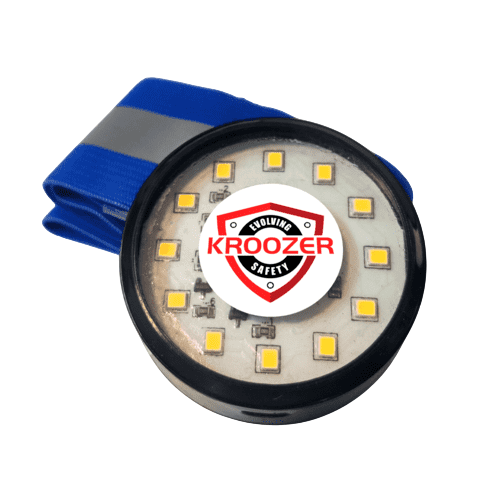
The KROOZER Strobe Light for Bike – V7.0 Pro with Brake Mode is built around the two things that actually win daylight. It comes as a pair, a pod on each side of the bike, roughly 40 cm apart, so you arrive as a width rather than a dot. And it can change, which a headlamp cannot: there are 20 selectable modes, including a steady Always-On setting if you would rather not flash at all, and Brake Mode wires into the brake light so the pods fire when you brake as well as running their pattern.
The fitting is a bolt-on L bracket with no drilling, and most riders have both pods on in 15 to 20 minutes. The housings are sealed anodised aluminium and waterproof, fitment is universal, it is made in India at Rs 1,399 with a 1 year warranty, and shipping is free across India on orders above Rs 1,000. If you want to compare the range first, it is all in our strobe lights for motorcycles.
Said plainly, because it matters: Kroozer strobes are auxiliary visibility lights. Rules vary by state and by how a light is used, so check your local RTO guidance and ride considerately. The idea is to be seen, not to dazzle the person coming the other way.
What to do with your own bike this week
Sit the bike in the sun, stand where a car driver’s eyes would be, and look at it head on. Ask what gives away how wide it is, and what would change if you were moving. If the answer to both is one headlamp in the middle, a strip beside that headlamp is not the fix.
If you are choosing between kinds of light rather than brands, read why the strongest bike light is not the brightest number next, then what a flash does well and what it cannot do. For the whole picture after dark, there is how to be more visible on your bike at night and in the rain.


