








Ask this on any riding forum and you will collect both answers within the hour. Flashing lights save lives. Flashing lights are confusing and annoying. Here is the short version, and it is the one that holds up: a flashing light gets you noticed sooner than a steady one, and getting noticed is most of the battle after dark. But a flash on its own gives a driver a poor sense of how far away you are. The setup that actually keeps you safe runs both at once: steady lights a driver can measure, plus a flash that makes them look at you in the first place.
That is the whole answer in two sentences. The rest of this piece is the why, and the handful of situations where flashing carelessly can work against you.
Why a flash gets seen when a steady light disappears
Picture what a car driver is actually looking at behind you at night. A wall of steady red points. Tail lamps, brake lamps stuck in traffic, reflectors on trucks, shop signs, all of it sitting still in the windscreen. Your single tail lamp is one more red dot in that wall, and a bike’s is usually the smallest one there.
The human eye is built to ignore what does not change and to snap toward what does. A light with a rhythm registers even at the edge of a driver’s vision, before they have consciously looked at you. This is not a marketing theory. It is the reason an ambulance does not simply fit a brighter bulb and call it done. Rhythm is what cuts through, not raw brightness.
Riders feel this from the other side too. Think about the last time a blinking light caught your eye in your mirror before you could even say what it was. That is the effect working on you.
The catch: a flash is hard to judge
Getting a driver’s attention is only half of what your lights do. The other half is measurement. A driver following you decides how hard to brake, and whether there is room to overtake, by watching your light grow in the windscreen. That judgement leans on a light that stays lit. A lamp that keeps switching off gives the eye less to work with, so a rider running only a blinker can be noticed early and still be misjudged late.
The cycling world has argued about this for years, and the sensible position that came out of it is the one worth stealing: never run a flasher alone at night, run it next to a steady lamp so drivers get the attention and the measurement together. BikeRadar’s piece on flashing versus steady lights walks through that debate if you want the long version. The logic carries straight over to motorcycles.
What this looks like on a motorcycle
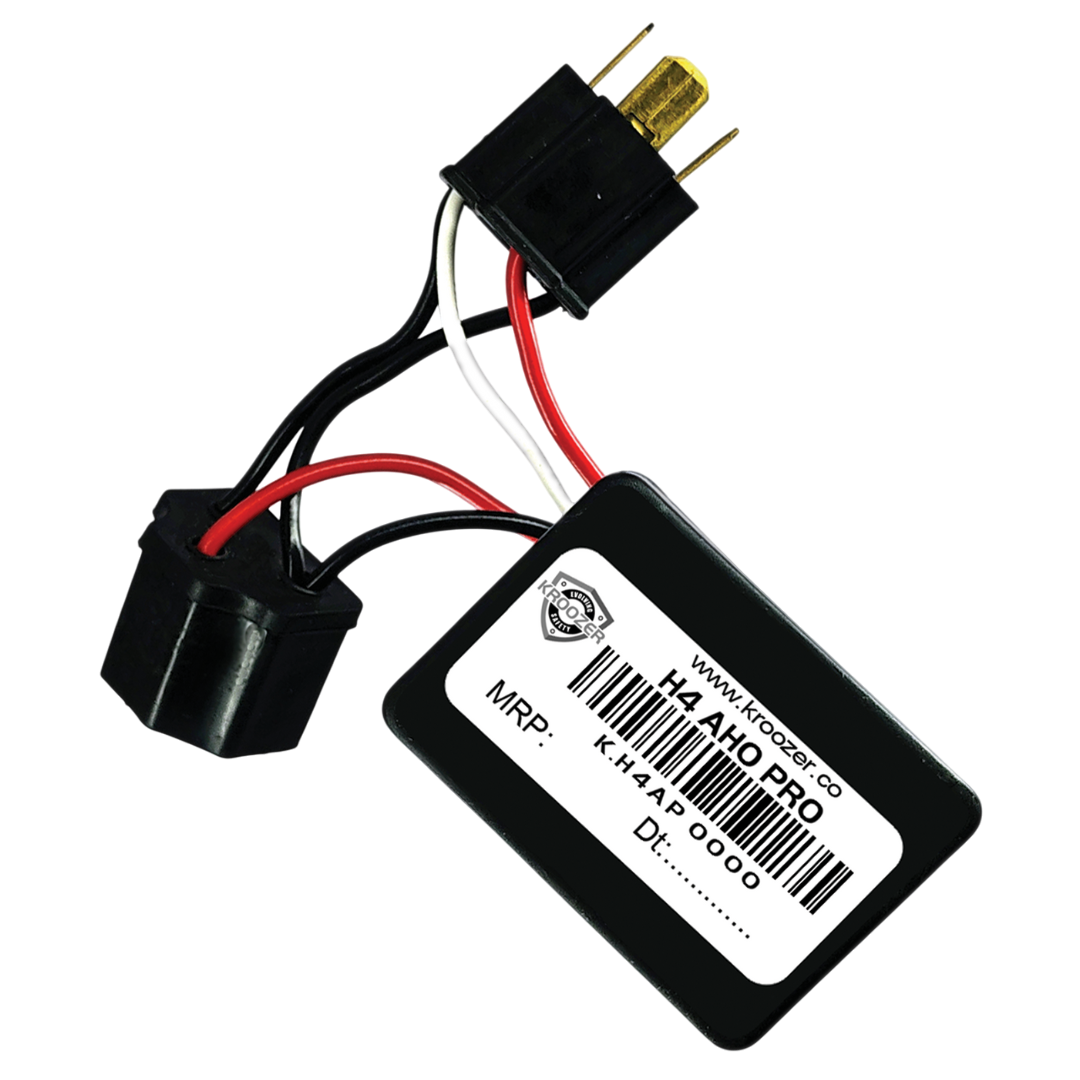
The good news is that your bike already carries the steady half of the equation. Newer bikes keep the headlamp lit whenever the engine is running, which is what that AHO setup on your handlebar is about, and your tail lamp burns steady at the rear. What most bikes lack is the attention half, at the end that gets hit most: the rear.
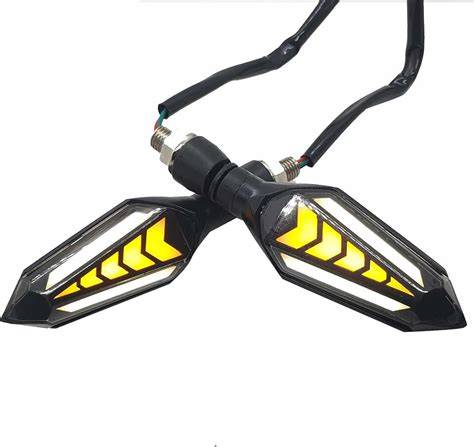
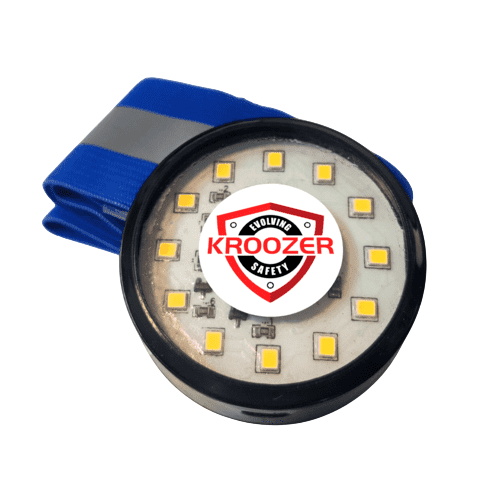
That is the slot an auxiliary strobe fills. It does not replace your tail lamp. It rides alongside it, as its own separate light, so a driver gets a steady lamp to judge and a rhythm that makes them look. Our STROBE V7.0 Pro kit is built around exactly this thinking: a pair of small pods, one each side of the rear, with Brake Mode firing them the moment you press the brake. Braking is when a following driver has the least time and needs the loudest signal, so that is when the flash earns its keep.
When flashing works against you
A flash is a strong tool, and strong tools can be used badly. Four habits to avoid.
First, do not ride along with your hazard flashers on. It feels like extra visibility, but hazards tell the traffic behind you that a vehicle is stopped, and they hide your indicators exactly when you need them. We wrote up what hazard lights are actually for separately.
Second, match the pattern to the traffic. A hard, fast pattern makes sense on an open highway. In packed, crawling city traffic, a calmer pulse does the job without hammering the driver sitting right behind you. This is why a decent strobe gives you a choice of patterns, 20+ on the V7.0 Pro, and why the switch is there to cycle down as well as up.
Third, remember the point is to be seen, not to dazzle. A light aimed at mirrors and eye level, running its harshest pattern in slow traffic, turns an ally into an irritation. Angle the pods at the road behind you and let the rhythm do the work. A small number of people are also genuinely sensitive to flashing light, which we cover in who should avoid strobe lights.
Fourth, know where you stand. The treatment of auxiliary flashing lights varies from state to state and depends on how you use them, so read up on the rules on blinking lights in India before you fit anything, and ride considerately once you have.
Quick answers
Are flashing bike lights safer than steady ones?
Safer at getting a driver’s attention, weaker at helping that driver judge your distance. Neither one replaces the other. The safe setup is both together: steady tail lamp and headlamp, plus a flashing auxiliary light at the rear.
Should a rear flasher be red or white?
Red. Drivers read white as the front of a vehicle and red as the back of one, so a white flash at the rear sends a mixed message. We covered the colour question properly in white or red strobe light for your bike.
Will a flashing light drain my battery?
A small LED strobe is one of the lightest loads on the bike, and because it flashes, it spends part of every second off. The longer answer, with the cases where you should pay attention, is in do strobe lights drain your bike’s battery.
Can I just use my indicators instead of a strobe?
No. Indicators and hazards carry specific messages, turning and stopped, and borrowing them as visibility lights scrambles those messages for everyone behind you. A dedicated auxiliary light flashes without saying either of those things.
Ride lit from both ends of the argument: something steady to judge, something flashing to notice. Be visible. Be home.


