








Walk into an accessory shop anywhere in India and ask for a flasher light for your bike. You will be shown four different things, and the shopkeeper will not be wrong about any of them.
Search for it and you get the same spread. A small relay for a hundred and thirty rupees. A set of indicator bulbs for two hundred. A pair of red and blue pods for two fifty. A lens bar for fourteen hundred. All four listings use the word flasher. None of them do the same job.
This is the most expensive kind of confusion in bike accessories, because you can spend money, spend an afternoon fitting the thing, and still not get the result you wanted. So here is what each of those four parts actually is, and how to tell which one you were looking for.
Why one word ended up covering four parts
The flasher started life as a single component: the little relay behind your side panel that makes the indicators blink instead of glowing steadily. That is its whole job. Change it and the blink rate changes. Remove it and the indicators stay on.
Then the word escaped. Anything that blinks on a bike started getting called a flasher, because that is the honest everyday description of what it does. Sellers picked up the word because people search for it. Now it sits in listing titles for parts that have nothing to do with each other, and the search results are a pile of unrelated hardware wearing the same label.
The four parts, and what each one is really for
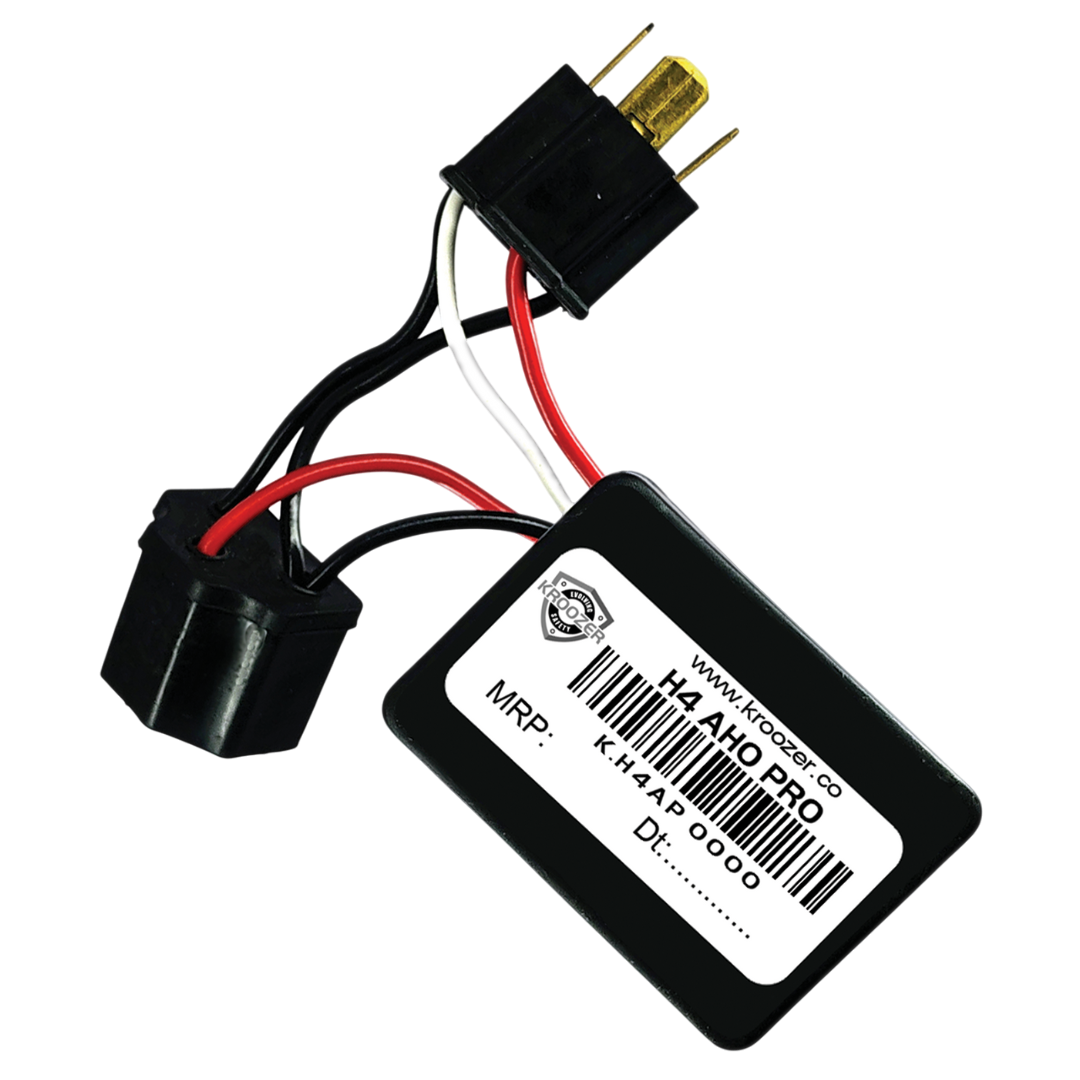
1. The hazard flasher module
Usually a small sealed box or relay that wires in near your indicator circuit, often with a switch and a choice of blink patterns. What it does is make both indicators blink together instead of one side at a time.
This is the part you want if your bike has no hazard function from the factory and you want one. It is a standing-still tool: broken down on the shoulder, stopped in a bad spot, warning traffic behind you about something ahead. It borrows your indicators, so while it is running you cannot signal a turn. That trade is fine when you are parked and wrong when you are moving. We wrote about that trade in detail in what hazard lights on a bike are for and when they work against you.
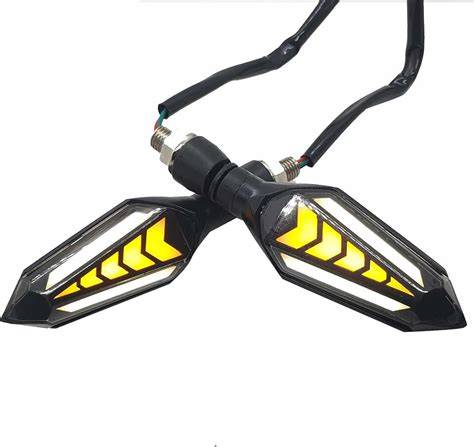
2. LED indicator bulbs sold as flasher lights
These are turn signal bulbs, nothing more. They go where your existing indicator bulbs are. Listings call them flasher indicator lights because indicators flash.
Fit them and you get brighter, sharper turn signals. You do not get anything new. One common surprise: swapping filament indicators for LED ones often makes the blink go fast and frantic, because the original relay was counting on the load of the old bulbs. A matched relay or module sorts that out. If your aim was simply better looking indicators, this is your part and you can stop reading here.
3. The brake light flasher
A module that sits between your brake switch and your brake light. Squeeze the lever and instead of one steady red, you get a short burst of pulses before it settles.
It is a good idea and it has one hard limit: it only exists in the moment you brake. On an open road at night, when nobody is braking and nobody is behind you yet, the bike is dark again. That difference is the whole argument in brake light flasher versus strobe light, which are not the same thing.
4. The auxiliary strobe
Separate pods, mounted on the bike rather than replacing anything, running their own pattern off their own switch. They are not turn signals, not brake lights, not hazards. They carry no message at all. Their only job is to make the shape of your bike register in the eye of a driver who is tired, in a hurry, and half looking at something else.
That sounds soft until you think about how eyes work at night. Drivers do not scan the road, they sample it. A steady light sits in the background with every other steady light: shop signs, streetlamps, the auto ahead. Change is what pulls attention. This is the part covered in what a strobe light on a bike actually does.
The question that sorts all four
Do not start from the word. Start from what you want to happen on the road.
- You want both indicators blinking while you are stopped: hazard flasher module.
- You want your turn signals to look better: LED indicator bulbs and a matched relay.
- You want your brake light to pulse when you brake: brake light flasher.
- You want to be noticed from behind and from the side while you are riding: auxiliary strobe.
Three of those four only speak when something happens. You turn, you stop, you brake. The fourth is the only one working in the long stretches in between, which is exactly where the trouble usually is.
Where Kroozer sits in that list
We make the fourth one, so read the next paragraph knowing that.
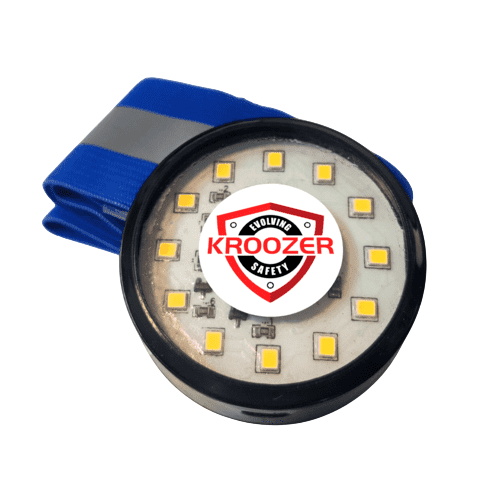
The KROOZER Strobe Light for Bike V7.0 Pro with Brake Mode is a pair of pods, one per side, mounted roughly 40 cm apart on a bolt-on L-bracket. No drilling. Most people have it on in fifteen to twenty minutes. The housing is anodised aluminium, the switch is a push button you can reach, and there are 20 selectable patterns so you can pick one that suits how and where you ride.
Brake Mode is the part that borrows from item three on this list. It wires into the brake light, so the pods fire when you brake as well as running their own pattern the rest of the time. You get the braking burst and the steady background presence from one kit instead of two.
Fitment is universal, so the bracket goes onto a Classic 350 the same way it goes onto a commuter or a scooter. It is 1,399 rupees for the pair, made in India, with a one year warranty against manufacturing defects. Shipping across India is free on orders over 1,000 rupees. We ship internationally as well: place your order as usual and we will quote the shipping cost and confirm it with you before dispatch. The full range sits in our strobe lights for motorcycles.
Before you fit anything that blinks
Kroozer strobes are auxiliary visibility lights. Rules on auxiliary lighting vary by state and by how the light is used, so check your local RTO guidance and ride considerately. We have written up the rules on blinking lights in India in more detail. The principle we hold ourselves to is simple: the point is to be seen, not to dazzle. Pick a pattern that reads as a motorcycle rather than as an emergency, mount the pods low and wide instead of in someone’s mirror, and keep them off in stationary traffic where nobody needs them and everybody is looking at you anyway.
So which flasher do you need
Whichever one matches the job. The word is not the product. If you wanted better indicators, you needed bulbs. If you wanted a hazard function, you needed a module. If you wanted the brake light to shout, you needed a brake flasher. If you wanted a driver to see you on a dark highway before anything has happened at all, you wanted a strobe, and the listings that share the word with it will not get you there.
Ride safe. Get home.


