








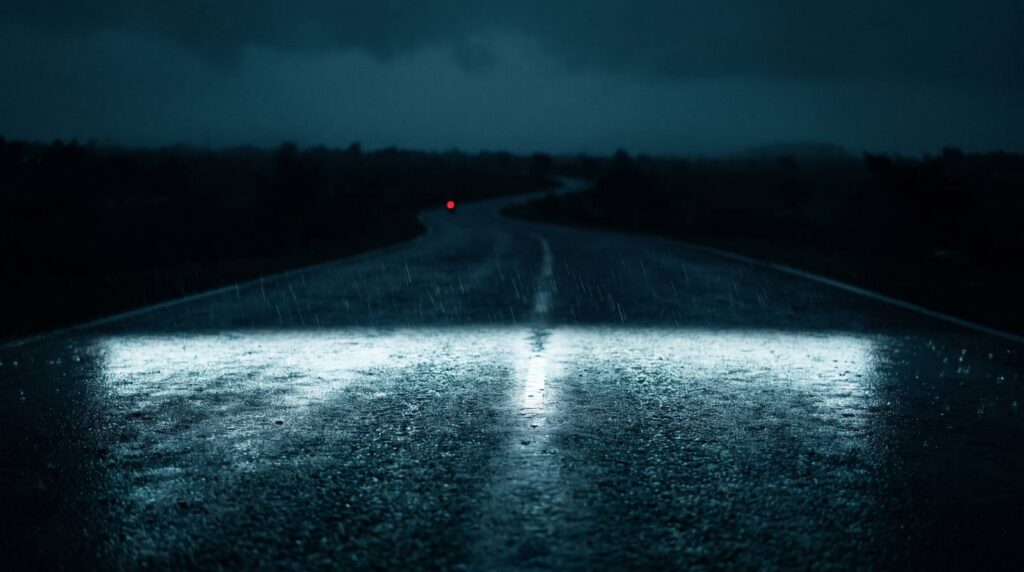
A rider buys an LED headlight bulb because the stock one has started to look yellow and tired. It arrives, it goes in, and the first night ride is a let-down. A hard bright pool near the front wheel, the road further out darker than before, and oncoming traffic flashing at you.
The bulb is usually not the problem. The housing you put it into is.
H4 and H7 are plugs, not grades
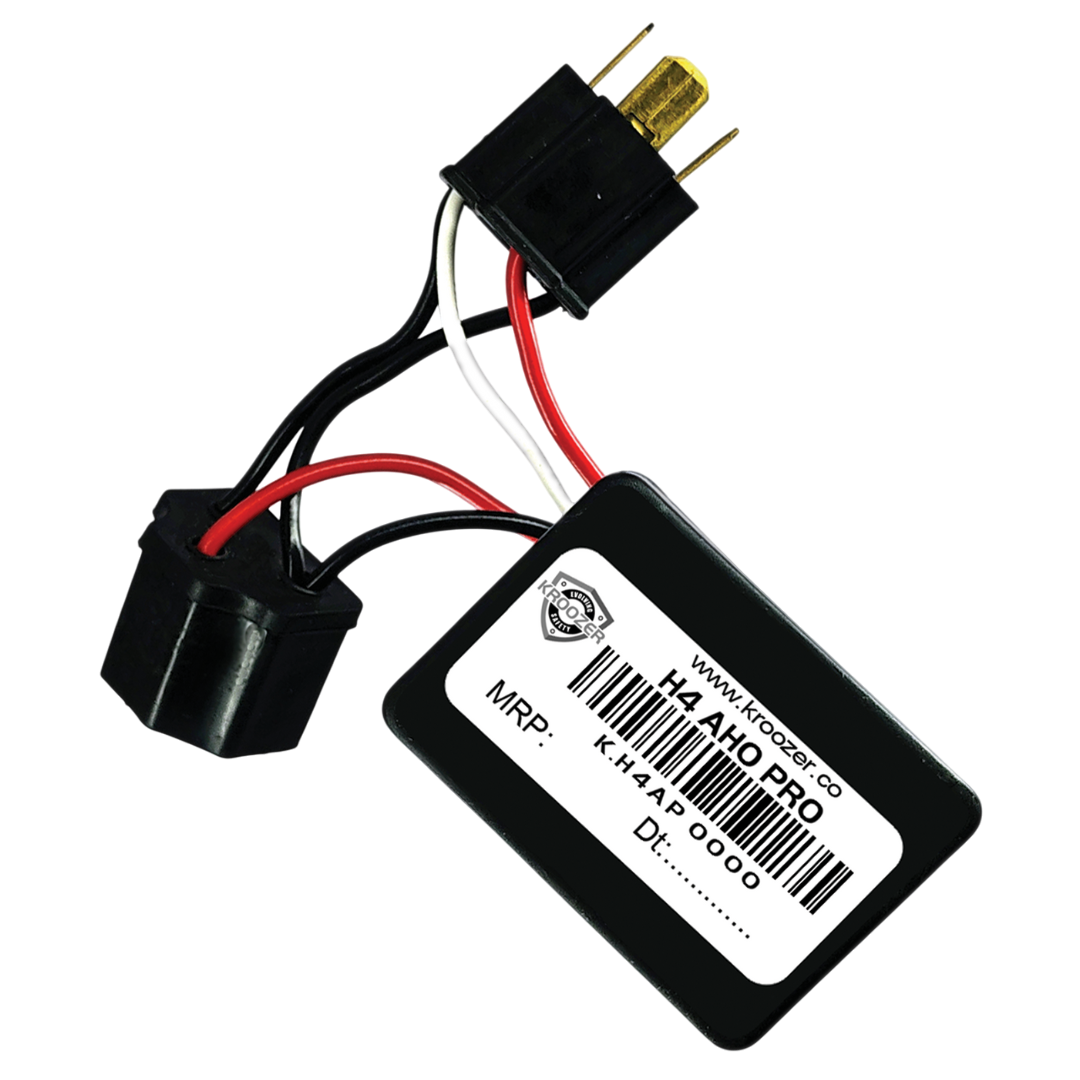
The question the internet keeps answering is which is brighter, H4 or H7. It is the wrong question. Those codes say nothing about brightness. They describe the base: its shape, how it locks into the lamp, and how many filaments the original bulb carried. H4 is the two-filament type, used where one lamp does both low and high beam, which covers most motorcycles sold in India. H7 carries one.
So “can I replace my H7 with an LED” has a boring answer. Physically yes, if the base matches. Whether it lights the road better is a different question, and it is settled just behind the bulb.
Where the light is supposed to come from
A filament is a short glowing wire sitting at a known, fixed point inside the glass. The reflector behind it is not just a shiny bowl. It is a mirror shaped around that one point, so the light leaving it goes forward in a controlled pattern with a flat top edge: bright down the road, dark above it.
An LED does not glow from a point. It emits from flat faces on a small board, and those faces sit wherever the maker put them. If they are not where the filament was, facing the way it faced, the mirror has nothing to work with. It scatters the light instead of aiming it.
That explains the three complaints riders post after an upgrade:
- A bright patch close to the bike and a road that goes dark sooner than before.
- Oncoming riders and drivers flashing at you even on low beam.
- Stray light climbing into trees, hoardings and first-floor windows, doing nobody any good.
None of that is a brightness failure. It is light in the wrong places.
Projector or reflector
This is why “projector headlight for bike” is now searched almost as hard as the bulb itself. A projector puts a lens in front of the source and a physical shield inside it, and that shield crops the beam before it leaves the lamp, so the flat edge comes from the housing instead of from the bulb happening to sit in exactly the right spot. The honest comparison was never LED against halogen. It is a lamp built around an LED against a reflector bowl built around a filament you have just removed.
The one check worth doing yourself
Park the bike square on to a flat wall, a few steps back, on low beam, and look at the shape on the wall.
You want a flat top edge with the light sitting under it. Darkness above the line, road below it. If what you get is a soft cloud with no edge anywhere, you have not bought reach. You have bought glare, and glare is light landing in other people’s eyes instead of on your road. The rider coming the other way loses a moment of vision because of it, which is the opposite of why you upgraded.
Check the aim while you are there. A beam pointed slightly high feels powerful from the saddle and blinds everyone else. Our guide on fog lamps and how they should be aimed covers it, and the same logic applies here.
Heat travels backwards now
A filament sends most of its heat forward, out through the glass. An LED does the opposite. It dumps heat backwards into its own base, which is why these bulbs arrive with fins, a braided sleeve or a small fan on the back.
That heatsink needs air and room behind the lamp. In a tight scooter headlamp shell, or behind a rubber dust boot moulded around a plain bulb, there is often neither. The fan is a moving part living in dust and vibration, so it tends to be the first thing to stop. We wrote about what actually fails on a bike light and in what order, and cooling parts come up early in that list.
What a headlight cannot do for you
Here is the part the shopping pages leave out.
The headlight is the only lamp on your bike that points away from you. Every rupee you put into it buys you sight. It buys you very little of being seen.
Think about who actually hits riders. The car at a side road on your right that pulls out across your path. The one closing up behind you in slow traffic. The auto that changes lane without a glance. To the first, your headlight is one small white dot with no width and nothing in it that signals speed, which is the thing a human brain judges worst. To the other two it is behind them, doing nothing at all.
Being seen is not a brightness problem. It is a problem of size, position and movement. Two separated points read as a vehicle with width. Something that changes pulls the eye in a way steady light never does, which is the argument we made in what a flash does well and what it cannot do. A single big number on a box tells you very little, which is why we also wrote why the brightest figure is rarely the right answer.
Four checks before you pay
- Match the housing, not just the plug. With a reflector bowl, look for a bulb whose emitters sit where the filament sat. Replacing the whole assembly gives you more control.
- Look for the cut-off. On the wall, or in someone else’s review photos of the wall. No flat edge, no deal.
- Leave the heatsink room to breathe. Check the space behind your lamp before ordering, dust boot and all.
- Keep the bulb you took out. It costs nothing, and it gets you home.
Where we come in, and where we do not
We do not sell headlight bulbs, and this guide is not a slow walk towards one. We make the other half: the part that faces the traffic rather than the road.
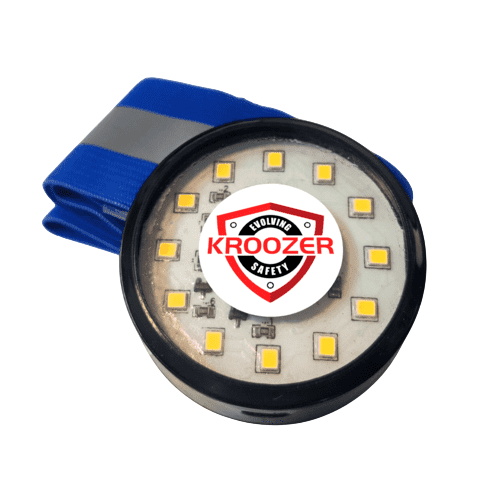
The KROOZER Strobe Light for Bike V7.0 Pro with Brake Mode is supplied as a pair, a pod on each side of the bike rather than one lamp in the middle, so there is real separation between the two points a driver sees. It mounts on a bolt-on L-bracket with no drilling, takes about fifteen to twenty minutes to fit, and runs off a push-button switch with 20 selectable patterns. Brake Mode wires into the brake light, so the pods fire when you squeeze the lever and the driver behind gets a change rather than one more steady glow. The housings are anodised aluminium and fitment is universal, so it goes on any motorcycle. It is Rs 1,399 for the pair, made in India in our own workshop in Jaipur, with a one-year warranty and free shipping across India on orders above Rs 1,000. International orders are welcome, and we quote the shipping cost and confirm it with you before dispatch. The rest of the range sits in our strobe light collection.
One thing to be clear about. Kroozer strobes are auxiliary visibility lights. The rules vary by state and by how a light is used, so read the rules on blinking lights in India, check your local RTO guidance, and ride considerately. The point is to be seen. Never to dazzle.
Get the headlight right and you will see the pothole. Get the rest of it right and the car at the side road sees you.


