








Search for a brake light for your bike in India and you get a wall of listings: bulbs, LED boards, blink modules, complete tail lamp assemblies. Almost none of them tell you what the lamp is for, or why it is the one light on your motorcycle that can be working perfectly and still say nothing useful.
Your brake lamp is different from every other light on the bike. A headlight and a tail lamp report a state: a vehicle is here, and this is which way it faces. A brake lamp reports an action, and only for as long as the action lasts. Every weakness it has comes out of that one difference, and it is worth understanding before you spend money making it brighter.
What the lamp is actually doing back there
On almost every road bike the brake light is not a separate lamp. It shares a housing, and often the same LED board, with the tail lamp. The tail lamp glows the moment the ignition is on. Squeeze either brake lever and a small switch closes, and that same housing goes brighter.
So the driver behind you never sees a red light appear. He sees a red light that was already sitting there get stronger, and he has to notice the change. That is a harder job for human eyes than noticing something new, and it is why a tail lamp you upgraded for brightness can make your braking harder to read rather than easier. The three jobs one tail lamp is asked to do covers that trap in detail, including why raising the running level closes the gap you actually depend on.
You slow down far more often than you brake
Here is the part no listing mentions. On a motorcycle, a great deal of your speed is lost without touching a lever at all. You close the throttle in traffic. You change down a gear coming to a junction. A bike on a shut throttle sheds speed quickly, and the switch under your lever never moves, so the lamp sits at its running level the whole time.
The car behind reads no change and holds its closing speed. By the time you do touch the brake, the gap has already shrunk. This is not a fault in your bulb and no brighter bulb will touch it. It is a limit of where the switch is: on the lever, not on the bike’s speed.
The signal lasts exactly as long as your finger
Indian traffic is stop and start, and most riders brake in short dabs rather than long pulls. Each dab is a flash of extra brightness that may land while the driver behind is looking elsewhere, and nothing is left over afterwards to tell him what happened.
Then you arrive at the signal, come to a stop and let the lever go, because nobody holds a brake through a two minute red. At that moment you are a plain running light again, in a row of plain running lights, which is the exact situation where the person rolling up behind you has the least to work with.
Three different products share the name
Once you know what the lamp does and does not do, the listings sort themselves out. The search term covers three unrelated things.
- A bulb or LED board that drops into the housing you already have. This fixes a dead lamp. It does not change any of the three problems above, and if you buy one that lifts the running glow, it makes the brake step smaller.
- A complete aftermarket tail lamp assembly. Worth it if the original is cracked, fogged or missing. Read what the word universal actually promises before you order one, because the fitment claim is doing more work than the picture suggests.
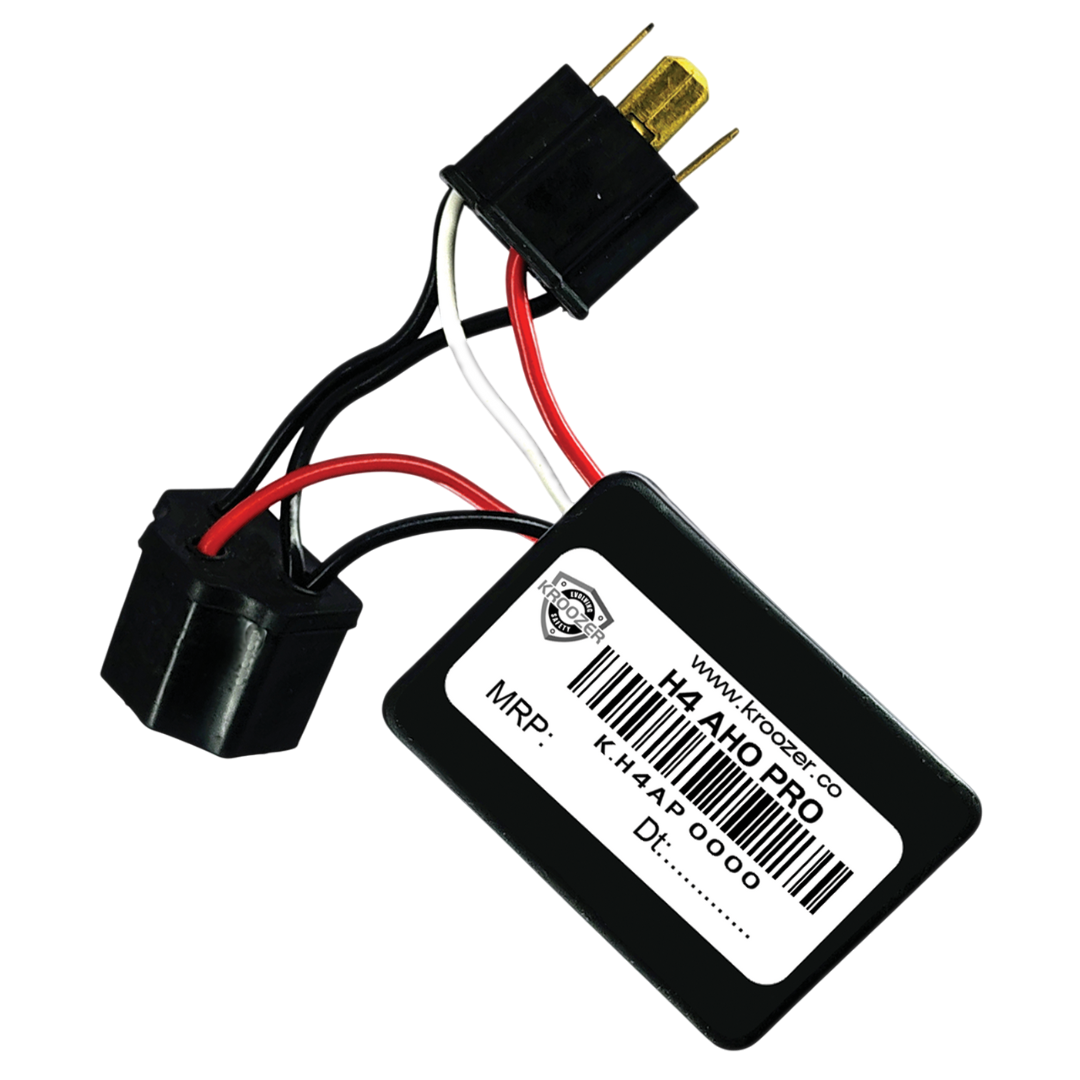
- A flasher or modulator module that makes the brake lamp pulse for a moment before it holds steady. This one does address the noticing problem, and it comes with its own trade offs. We wrote a whole piece on how a brake flasher differs from a strobe.
Do you need one, and what to check if yours has gone dark
A brake lamp is not an accessory you add. It is one of the lamps your motorcycle was built with, and a dead one is among the most common faults on an older bike, mostly because the rider cannot see it from the saddle. Get someone to stand behind you and squeeze each lever.
If it is dead, work in order rather than buying first. Bulb or LED board, then the earth, then the switch on the lever, which is a cheap wearing part that fails open and leaves you with a tail lamp and no brake signal at all. On the legal side, we do not give rulings: the lamps a road bike is expected to carry are set out by the rules that apply where you ride, and rules on extra lighting vary by state and by how a light is used, so check your local RTO guidance. If that is the question you came with, the rules on blinking lights in India is the honest version.
Where a brake linked strobe sits next to it
Our own answer to this is not a better bulb. It is to stop the brake message from depending on one small lamp in one place on the centre of the bike.
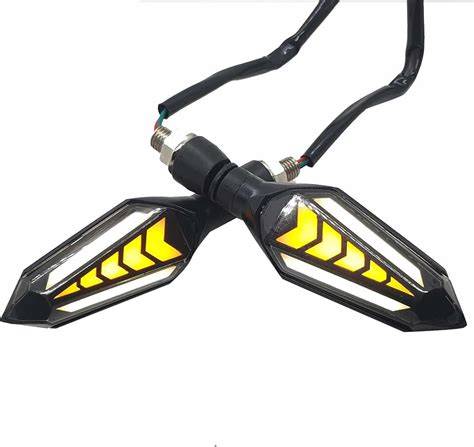
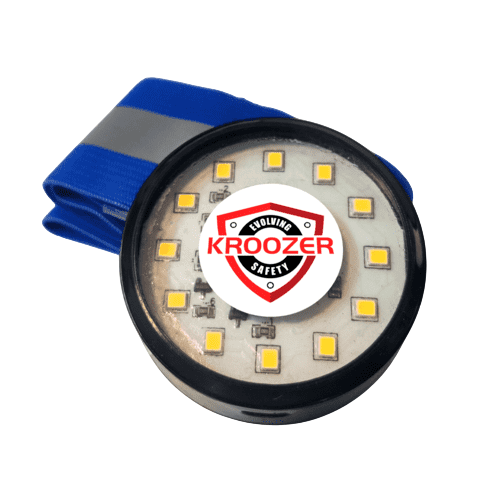
The KROOZER Strobe Light for Bike V7.0 Pro with Brake Mode is a pair of pods, one each side, and Brake Mode wires into the brake circuit so they fire when you brake as well. That puts the braking signal in two more places, out at the edges of the bike where a driver reads width and movement, instead of only in the middle where he has to judge a change in brightness.
The honest limit, because you should hear it from us rather than find it out: it is wired to the brake circuit, so it does not know you have closed the throttle either. Nothing at this price reads engine braking. What it does instead is run one of 20 selectable patterns the rest of the time, so there is a signal working in the gap where your brake lamp has nothing to say. Being noticed early is a different job from announcing a stop, and the two want different lights.
Practical details: supplied as a pair, bolt-on L-bracket, no drilling, fifteen to twenty minutes to fit, push button switch on the handlebar, anodised aluminium body, universal fitment across motorcycles. Rs 1,399, made in India, one year warranty against manufacturing defects. Free shipping across India on orders over Rs 1,000, and international shipping is quoted after you order and confirmed with you before dispatch. Compare it against the full range of Kroozer strobe light kits.
What to do, in order
- Confirm the lamp you have actually works, on both levers. Most riders have never checked.
- Resist the urge to raise the running brightness. The brake step is the message, and a brighter glow shrinks it.
- Decide which problem you are solving. A dead lamp wants a bulb. A lamp nobody notices wants movement or width.
- If you ride in traffic or after dark, put something at the edges of the bike that works when your brake lamp is idle.
A brake light is a good signal with a narrow window. It tells the truth, briefly, about the thing you are doing right now. The rest of the ride, which is most of it, something else has to speak for you.


