





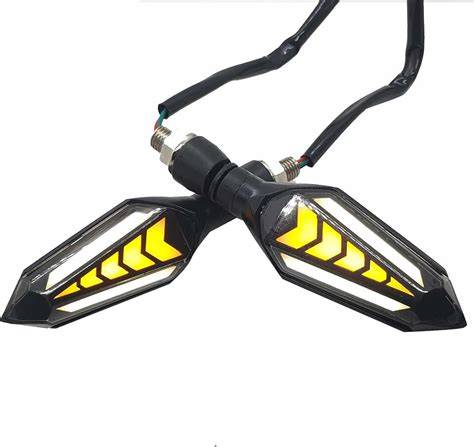


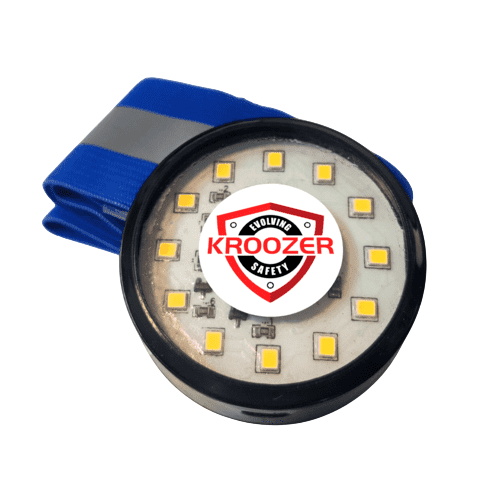
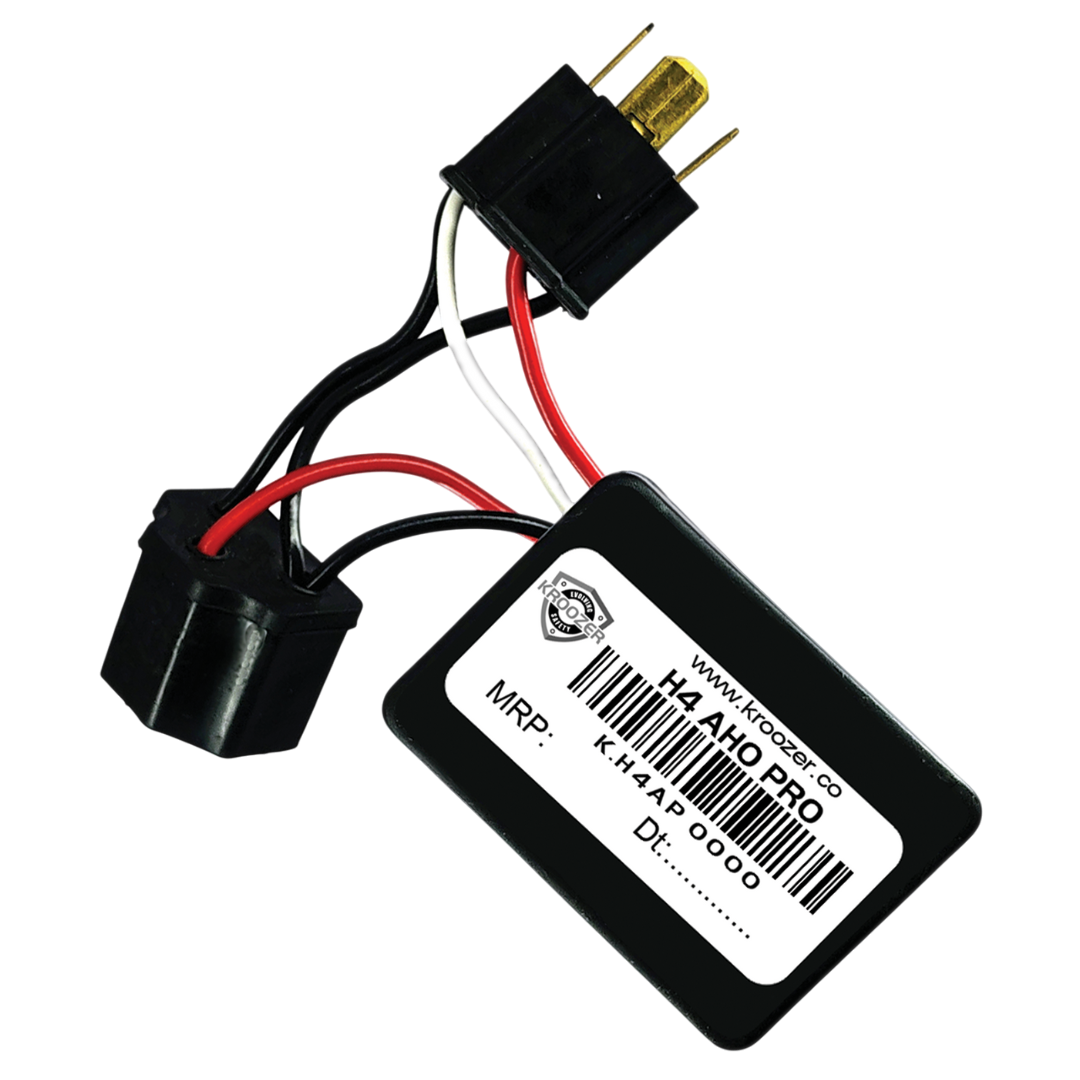

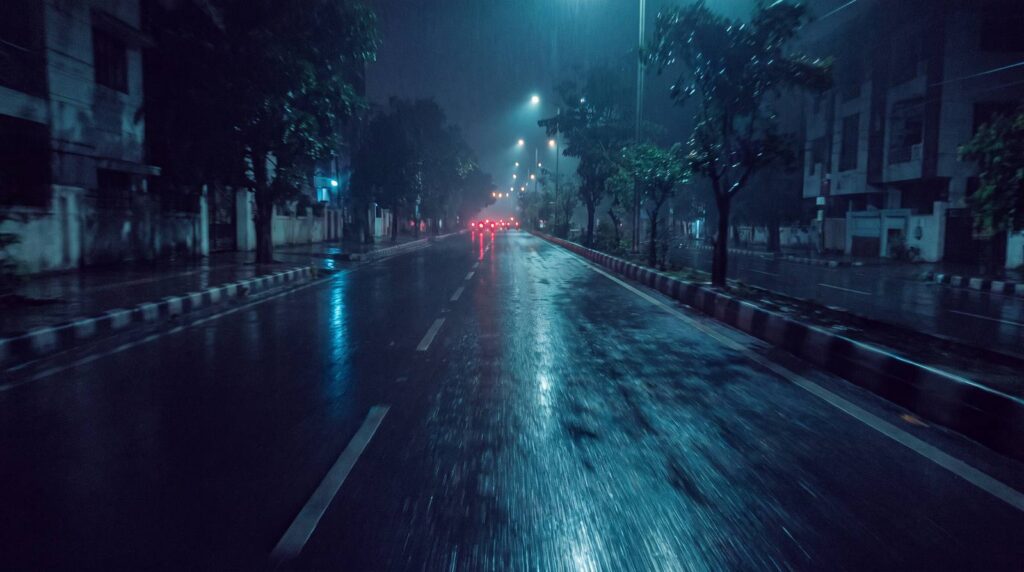
Type “best night light for a bike” into Google in India and look at what comes back. Bicycle lamps with horns at two hundred rupees. A rear light for a road cycle at six thousand. Tyre valve lights that blink in six colours. A headlight bulb upgrade. A ten year old listicle written for commuters in another country.
None of it is wrong. It is just answering a different question from the one most Indian riders are asking. Here, “bike” usually means a motorcycle. To Google’s shopping index, “bike light” still mostly means bicycle. So the results you get are a catalogue of things, and the question you actually had was which one your bike is short of.
That is a question you can answer yourself, tonight, in about five minutes, without buying anything first.
Night asks three separate things of your bike
Lighting on a motorcycle is doing three jobs at once, and they fail independently.
Seeing the road. Your headlight. Potholes, speed breakers, the dog, the unlit divider. If this is the job you are short of, a rear light will not help you, and the honest version of that argument sits in our guide to what the rules on fog lamps actually turn on, including where a seeing light belongs and how it should be aimed.
Being seen from behind. Your tail light and brake light. This is the job almost every night purchase skips, and it is the direction most riders cannot check for themselves because they are sitting in front of it.
Being seen from the side. Junctions, lane changes, the car easing out of a gate. Your indicators do this for three seconds at a time and then stop. Nothing else on a stock bike marks your width in the dark.
Most riders shopping for a “night light” buy for the first job, because that is the one they experience. You feel a weak headlight every time you ride. You never once feel a dim tail light.
The five minute test
Do this on your own street, after dark, with the engine off and the key on.
Ask someone to stand behind the bike, roughly where a car would sit at a signal. Then have them walk back to the far end of the street and look again. Ask them four things.
- Can they see the tail light at all from the far end? Half the tail lights in this country are behind a lens that has gone milky with dust, sun and cheap polish. Wipe it with a wet cloth and ask again. That is the cheapest night light you will ever buy.
- Squeeze the brake. Does anything change? A brake light that is barely brighter than the tail light is doing nothing useful in a queue of red lights.
- Now stand off to one side, at the angle a car comes out of a side lane. What can they see? On most bikes the answer is the headlight spill and nothing else.
- Finally, look at the bike the way the traffic behind it does, against the background it will actually sit in. A shop front, a row of parked vehicles, an advertising board. A small steady red point disappears into that. We wrote about why the number on the box does not settle this in our guide to what the strongest bike light really means.
Whatever the test tells you, it beats a product listing. You now know which of the three jobs your bike is short of, and that decides what to buy.
Read the result
If the road ahead is the problem, you want a seeing light, aimed down and set up so it does not throw glare into oncoming eyes. That is a headlight or an auxiliary lamp question and it has nothing to do with strobes.
If the tail light was dull or the brake light barely moved, fix that before you add anything. A new accessory bolted onto a bike whose existing lights are dirty or failing is money spent in the wrong order. Clean the lens, check the bulb, check the earth.
If everything works and you still vanished into the background, that is the real gap, and it is the one a rear facing auxiliary light is built for. What helps here is not more output. It is something that changes while everything around it stays still, and something that marks how wide you are so the driver behind can judge the distance to you. We go into what a flash does well, and what it cannot do, in our guide on whether flashing bike lights are safer.
If you ride a bicycle, or you only need light for an occasional walk home, buy the clip on. We say so plainly in our guide to which bike strobe light is best, judged by how it gets its power. A rechargeable clip on at two or three hundred rupees is the right answer for that rider and we are not going to pretend otherwise.
Where our own light sits in that
The KROOZER Strobe Light for Bike V7.0 Pro with Brake Mode is built for the third result, and only that one. It is a pair of pods, one on each side, mounted on a bolt on L bracket with no drilling, about a hand’s width apart across the back of the bike so you read as a width rather than a dot. Brake Mode wires into the brake circuit, so the pods fire when you brake as well as running their own pattern. There are twenty selectable patterns and a push button switch, so you can leave it off in traffic that does not need it. Anodised aluminium body, sealed housing, universal fitment across motorcycles, made in India, one year warranty, 1,399 rupees for the pair. Free shipping on orders above 1,000 rupees, so this one qualifies, and international orders are quoted and confirmed with you before dispatch. The rest of the range sits in our strobe lights collection.
One thing we will not tell you is that it is the right buy for every rider who searched that phrase. If your test said the headlight is the weak point, buy a headlight.
Quick answers
Is a brighter headlight the best night light for a bike? It is the best light for seeing. It does very little for being seen from behind, which is the direction most night risk arrives from.
Do I need anything if my bike is new? New lights are clean lights, which is most of the battle. Run the test anyway and look at the side angle, because that gap exists on new bikes too.
Can I just use my hazard lights? They mean something specific to other road users and using them while moving muddles that message. We covered where they help and where they work against you in our guide to hazard lights on a bike.
What about the law? Kroozer strobes are auxiliary visibility lights. Rules on auxiliary lighting vary by state and by how the light is used, so check your local RTO guidance and ride considerately. The point is to be seen, not to dazzle. For the background, read our guide to the rules on blinking lights in India.
What should I fit first? Whatever your test flagged. In our experience the order that helps most riders is: clean and fix what you already have, then add something rear facing that changes, then think about the road ahead. A fuller version of that stack is in our guide on how to be more visible at night and in the rain.


